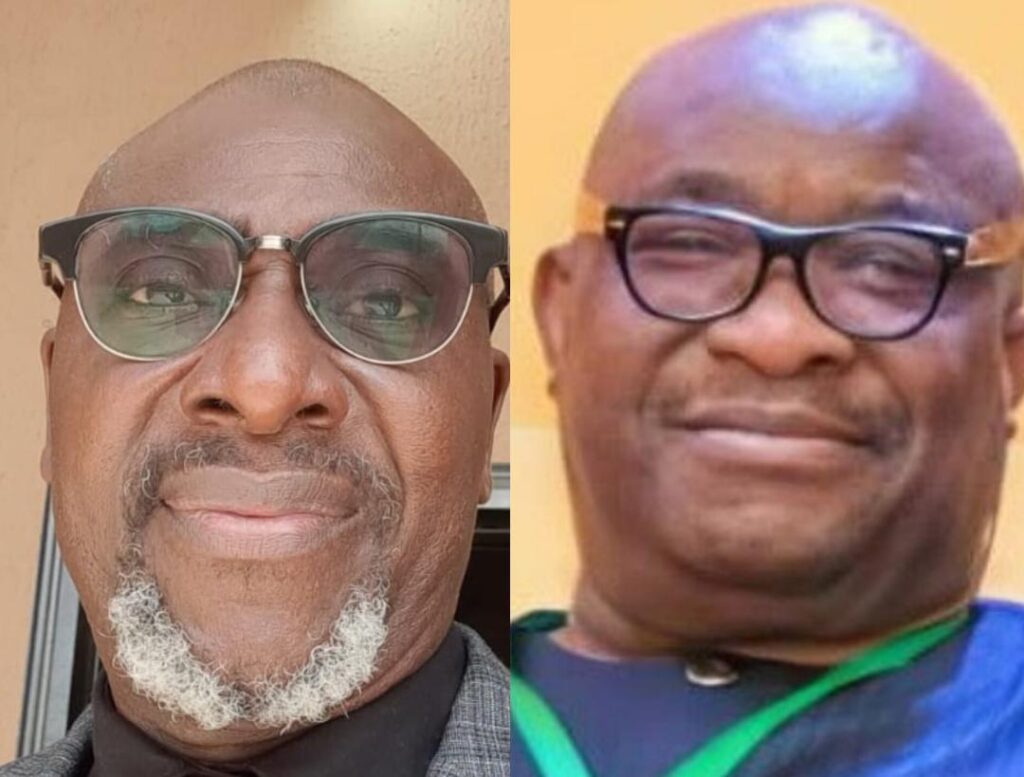
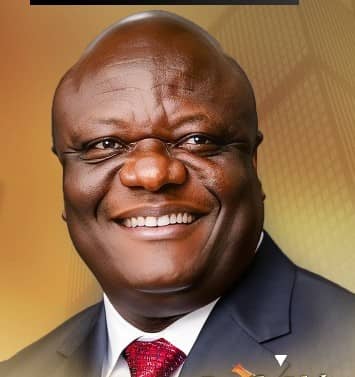
Professor Abiodun Adeniyi, who was recently appointed as the Vice Chancellor of Baze University, Abuja, was employed as a reporter at The Guardian in 1992, starting from the Lagos newsroom before being transferred to the Federal Capital Territory, Abuja.
In this excerpt from The Making of The Nigerian FLAGSHIP: A story of The Guardian, Adeniyi recalls how career at the newspaper till he left to begin his academic journey.
*Dateline: January 1992. Venue: Sheraton Lagos Hotel and Towers. It was one of those assignments where reporters would converge to listen to a newsmaker. Gbolahan Gbadamosi, and I walked out afterwards, chatting towards the exit. “You can try us at The Guardian. They are now recruiting,” He said to the then Lagos State Correspondent of Today Newspapers.
“I shall try,” I replied, as we parted ways. And tried I did, days later, and was signed on, after the regular organisational processes, appearing much more graceful, going by tougher tales from some others. I, however, did not take that for granted. I knew I had to belong, having longed to be part of the best, one that was still soaring.
From the political beat, I began. Akpo Esajere was in command. He was then a bespectacled, 39-year-old writer. He cut an image of a crack thinker. His head submerged in the desk, he would deliver his simple, scintillating prose, intermittently interrupting it with a call for verification. “Abiodun, check the library….” for this, or that. His knack for confirming information was infectious.
My beat was, first, the National Republican Convention (NRC)-one of the political contraptions of the Military President, Ibrahim Babangida. Beat runs and recognitions were now easier. The Guardian’s reputation facilitated that further, and farther from my previous title. Political sources were easily attracted, desiring to be heard through The Guardian. I savoured it early, added with the leads, and other prominent stories it generated. I travelled around the country too, as an embedded reporter, dispatching stories from here, there, and thither, and making a name as a political reporter of note. “A reporter with calibre” was Esajere’s way of describing it.
I had just finished a report one evening, sitting and waiting for Desk Head, Esajere, to dismiss us, when a tap came on my shoulder. “Abiodun, you will move to Abuja,” Eluem Emeka Ize, the brisk, spick-and-span-looking editor of the paper, said to me, between a command and an instruction.
Abuja had just become the nation’s capital, with the relocation of President Babangida. State House Reporters moved with him. Other beats were bound to follow. Politics was one of them, given the military fabrication of democratisation. Not a few of my colleagues from The Guardian and other papers had already moved. The political beat needed more hands. I had become the youngest, most visible political reporter on the Lagos desk, who could be flexible with location. Izeze’s command was, therefore, not surprising. It was most welcome, especially with encouragement from those already in Abuja.
To Abuja, I therefore headed, joining Camillus Eboh (Bureau Chief), Osaretin Imahiyereobo (Political Correspondent), Yinka Oduwole (State House Reporter), and Emeka Nwankpa (Finance Reporter). In the new capital city, the name of The Guardian equally provided easy access to sources. This characterisation had to be sustained from your little corner, regardless. Be top-notch in delivery, timely with reports, and as detailed as possible, to prevent a verbal or written query from Lagos.
The Abuja Bureau was a hub of reports, a springboard around which events rotated, raising the stakes for reporters. While an explosion of bylines highlighted relevance, fulfilment additionally came from the pedestal of display-The Guardian: The Flagship of the Nigerian Press, a reader, and newsmaker’s choicest, and a thinker’s best plate. From covering different political beats in Abuja, I travelled too. I was in Havana, Cuba; Amman, Jordan; Accra, Ghana; Paris, France; Amsterdam, Netherlands; and often in London, England.
But like everything that has a beginning, there will surely be an end. That end came, courtesy of the British Chevening Scholarship, which transported me to the University of Leeds for a master’s degree, and then another opportunity for a doctorate. New realities of return, unhelped by reverse culture shock, defined new grounds, despite the strong nostalgia for The Guardian years, a solid foundation, superb training ground in the fine arts of letters, so deep to forget, and so helpful not to be appreciated.
PROFILE
Professor Adeniyi is a distinguished scholar of Communication and Media Epistemology.
He has held various academic positions, including Registrar of Baze University and Head of Department at Baze University.
His research focuses on Internet and Diasporic Communication, with a significant emphasis on the Nigerian Diaspora and the online mediation of distance, longing, and belonging.
Adeniyi’s academic contributions have been recognised with a British Chevening Scholarship and a Doctor of Philosophy (PhD) from the University of Leeds.
He has also served as a communications consultant for the World Bank Economic Reform and Governance Project and has been a visiting assistant professor.