
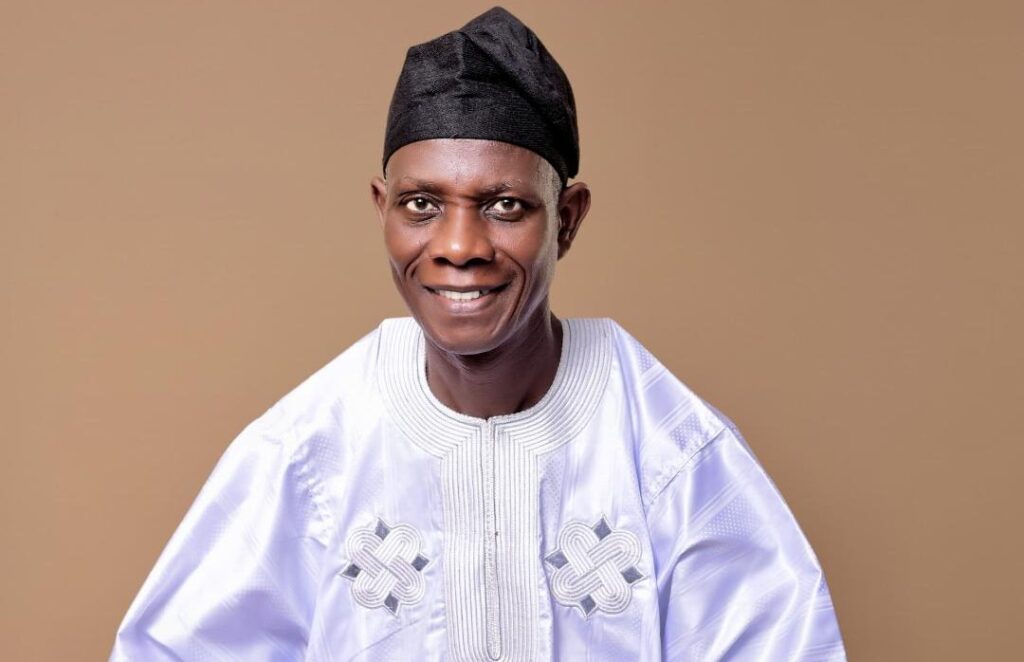
The Managing Director and Editor-In-Chief of FrontPage (frontpageng.com), Mr Sakibu Olokojobi, recently clocked 60. In this interview, the former Deputy Editor of Compass and National Mirror reviews his life and career journeys, among other issues.
Clocking milestone ages comes with some feelings. For you, what does clocking 60 mean?
Clocking the milestone age of 60, to me, is only by the grace of God, and in recognition of that, I cannot but give special thanks to Him. Everybody has their peculiar stories about life, and when one reflects on one’s journey, one wouldn’t but thank God. To me, it is about deep reflection and special thanks to God for all the things He has done and not done in my life and the lives of those around me, including families, friends, colleagues and others.
One does not live in isolation, and to a reasonable extent, one’s survival or whatever one becomes in life is shaped by so many factors, including the people and things around one. So, to me, it means a moment for serious thanksgiving and appreciation of the goodness of the Almighty, not only in my life, but those around me and those I have had contact with in this journey of life.
It is also an opportunity to recommit oneself to doing things that would continue to make the society a better place, and inspire many others, especially the young ones who look up to one and have identified one as a role model. Put in another way, to continue to be a good example to others.
Looking back, have you been able to accomplish the life and career dreams you had since you started working?
Alhamdulilahi, to a great extent, I would say I feel accomplished about my life and career dreams. To begin with, I have not been unnecessarily and excessively ambitious about what I want to be or achieve as an individual and as a career person. I would say my dreams are built on the way I believe God has created me. I like to be the true me and not any other person.
The true me is being modest, unassuming, straightforward, committed to being responsible, focused, hardworking, self-developing and not given to materialism. So, to that extent, I would say, yes, I have been able to live the dream of my true self. And on the other hand, with regards to my career as a journalist, I feel highly fulfilled. My dream right from when I was young was to become a good writer and a damn good journalist in order to contribute to making society a better place. Those dreams have come to reality.
My editors have always spoken well of me as a good reporter, my colleagues have not described me as a failure and many reporters who have worked under me have spoken well of me as one of the editors who contributed to their career positively in one way or the other. Without doubt, my activities as a journalist, I would say, have contributed to making society a better place. Through the kind of stories that I write and the ones I refuse to write; through what I publish and what I refuse to publish, the impact has been real. To me, those achievements are fulfilling.
What principles have guided you in coming this far in life and would recommend to others, especially younger persons?
Modesty. Contentment. Perseverance. Doggedness. Good-naturedness. Sincerity. Creativity. Thoroughness. Most importantly, trust in God. There may be some others, but these are the basic ones I believe have guided my journey, whether as a person or a professional.
How would you describe your journalism career over the years and the major accomplishments you are proud of?
My journalism career has been very interesting, and as I had said, I feel fulfilled with my modest achievements. I never set a target too ambitious for myself. All I just wanted was to be a good writer and journalist with the mind to contribute to the betterment of society. That to me was not too much to ask from myself. That I could rise from being a reporter to the position of a Deputy Editor of two national newspapers at different times before becoming the Managing Director and Editor-In-Chief of one of the most credible, distinct, thorough and ethical upright online newspapers in Nigeria, FrontPage (frontpageng.com), to me, is a great achievement. I give God the glory.
Over the years, I have enjoyed the impressive benefits of being a journalist. I have also suffered the pains of being one. To a great extent, the gains far outweigh the pains. To try to enumerate the experiences is to attempt to take the whole day talking. But I would affirm that journalism has given me a name that could open doors. The mention of my name in some places where I least expected to be recognised had, at different times, made some exclaim: “Oh, you are Sakibu Olokojobi!” That can be interesting.
An example is an experience which has refused to leave my memory. Upon being transferred back to Lagos after some years in Abuja, when I was in The Punch, I was held for driving against traffic at Wahum area, off Oba Akran in Ikeja by two police women. That was, I think, 2003. I told the policemen that there was no sign to the claim that it was a “one-way”, but they were unyielding. So, they joined me in my car and said I should drive to the station near the railway line. Some metres to their station, they told me to park and tried to make me “bail” myself before getting to the station. I, however, refused to play ball. I told them that we were close to their station, so they should take me there or let me go. They did the former. When we got there, they took me to the traffic section and handed me over to an officer who apparently was their boss. He asked what my offence was, and they told him I drove against traffic. He wanted to hear from me, and I started with the introduction of myself: Good afternoon, sir. My name is Sakibu Olokojobi, and I work with…
He didn’t allow me to finish when he exclaimed, “Ah, of the Punch!” and I said yes. His countenance changed.
As though reading my citation, he said: “You covered the Presidential Villa for Punch; you also covered the National Assembly. You were…”
I just stood there smiling as he continued.
“What kind of car is he driving?” The officer turned to the police women, and they told him: “BMW.”
“It must be a 5 Series?” he asked.
“It’s 3 Series,” I told him, smiling.
Certainly, the police officer was an avid reader of The Punch.
He collected the key, told them to return to their duty post, and we started talking. I explained the situation to him that the sign indicating that it was a “one-way” was not visible. At least, I did not see any. He was very civil, and we exchanged banter. At the end of the day, I was “discharged and acquitted” on “self-recognition,” so to speak.
Other instances abound that have made me satisfied that I have, with my work as a journalist, impacted society.
What has been your experience and challenges running your online platform?
Running an online newspaper has been very great. The online newspaper phenomenon has allowed me to own a newspaper, a dream I had thought would never materialise, given the prohibitive capital required to set up a conventional newspaper. However, with the coming of online newspaper publishing, I have been able to live my dream. It has also extended the opportunity for me to continue to contribute to making society a better place through journalism in different ways.
Of course, there are challenges. Finance is one major. Sustaining the online newspaper requires good financing. There are bills to be paid. There are challenges with the technical aspects, which, if not taken seriously, would make the newspaper prey in the hands of hackers. The adverts are not as available as one would have wished. This is because the advertisers are also mindful of the poor economic state in general. But I must sincerely say that it has been a rewarding experience in different ways.
Despite all odds, the patronage we enjoy today in terms of readership is far bigger than it used to be. The patronage we have enjoyed in terms of advert placement over the years has continued to increase. Those successes result from hard work, and we strive to continue to keep the tempo in order to sustain the growth.
What advice do you have for upcoming journalists to excel in the profession?
Upcoming journalists should be passionate about journalism. They should be dogged and focused. They should read well and make use of every available training opportunity. They should join the professional associations and work towards the upliftment of the profession. They should be ethical in their practices and aim to reach the top. It is a profession that requires giving one’s all, and one should try to do. Doing so has its gains. Opportunities abound, and they should make good use of them.
What have you had to do to advance your career to get to where you are now?
The passion I have for journalism is a natural thing, so fuelling it comes automatically. All I do is continue to make use of any training opportunity that comes my way. Thank God that today, there are virtual trainings. I attend to anyone available. I try to create time for them, and I have been the better for it. Those trainings have helped me a lot because they remind me of those things I knew, but had abandoned. They open new vistas about the evolving trends and keep me updated. Discussions, writings and other things about journalism excite me, and from them, I learn, unlearn and relearn.
What are your future aspirations as you grow older?
My aspiration is to continue to contribute to the journalism profession and society in general better than I have done so far. There are one thousand and one ideas waiting to be actualised. Many have been done halfway, many are still at the embryonic stage, while many have not even been considered at all. It is just normal that one takes a step after the other; otherwise, one would not be able to achieve anything. Most important, as far as I am concerned, is for the Almighty to grant one the grace to achieve one’s goals.
Any other issue you would like to share your views on?
I would like to thank the Media Development Career Network for this great honour. It’s a recognition that I really appreciate. I also want to commend the network for the great work it has been doing to uplift journalism. The trainings, recognitions and general contributions to the profession have been quite impressive. I believe that having more organisations of this nature will contribute more to this all-important profession and make upcoming journalists well-equipped and able to seize the opportunities that come with being a great journalist.
I also wish funds were available for an organisation like the MDCN to do more. I recall the training you organised for Mass Communication students at UNILAG over a year ago and the calibre of resource persons available. Some of the books made available were very rich and such that any journalist, old or young, should have. I wish you more sponsorship for such laudable projects. Thank you for all you are doing for our profession. Posterity will speak well of you.