
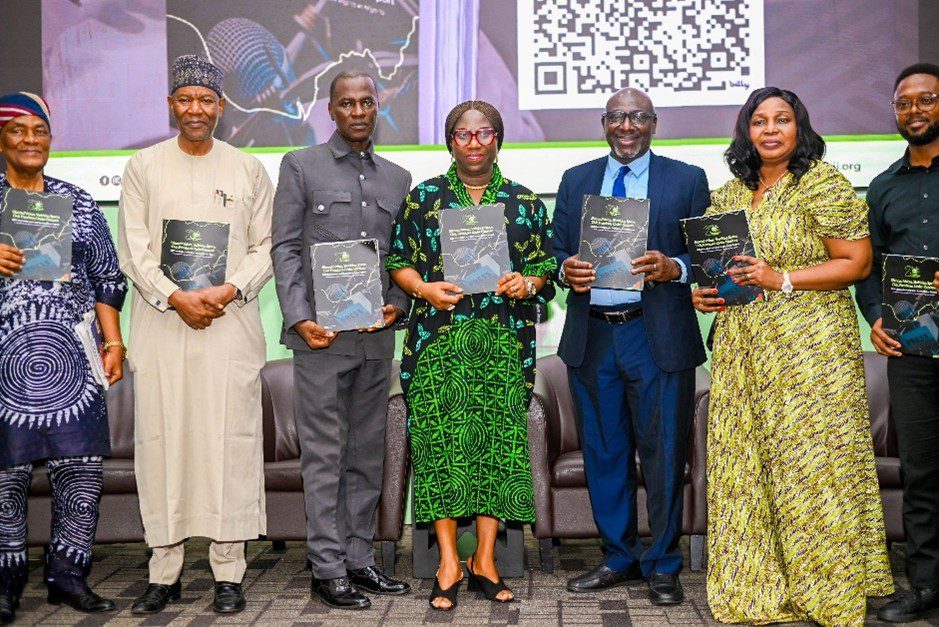
Freedom of expression remains the most affected civic right in Nigeria, with 172 recorded incidents, according to the 2025 Journalism and Civic Space Status Report released by the Wole Soyinka Centre for Investigative Journalism (WSCIJ).
The report, titled Silenced Voices, Shrinking Spaces: Civic Freedoms Under Pressure, was reviewed by Media Career Specialist and Founder of the Media Career Development Network, Mr Lekan Otufodunrin, at the 18th Wole Soyinka Media Lecture and Launch of the 2025 Journalism Civic Space Status Report in Lagos.
It analyses documented violations of civic freedoms across Nigeria between January and December 2025, highlighting growing concerns over restrictions on democratic participation despite constitutional guarantees of fundamental rights.
According to the findings, Nigeria’s civic space remains under significant pressure, with violations affecting freedom of expression, access to information, peaceful assembly, association and broader forms of civic participation.
The report shows that journalists, media organisations, activists and citizens expressing political, social and governance-related views were among the groups most frequently affected. However, one of the most notable developments during the reporting period was the sharp increase in incidents involving ordinary citizens.
While journalists were the most affected group in 2024, citizen-related incidents rose significantly in 2025, indicating that restrictions are no longer limited to the media but are increasingly extending to wider forms of civic participation, public dissent and democratic engagement.
Geographically, violations remained concentrated in areas with high levels of political activity, media presence and civic engagement.
Abuja and Lagos accounted for the highest number of reported incidents, reflecting their roles as centres of governance, economic activity, media operations and political mobilisation.
The report cautioned, however, that the relatively low number of reported incidents in several states should not automatically be interpreted as evidence of unrestricted civic space. In many cases, low figures may reflect underreporting, limited documentation, media constraints or the normalisation of restrictions that no longer receive public attention or media coverage.
Speaking during the review, Mr Otufodunrin explained that the report relied strictly on documented and verified incidents.
“You can’t invent what was not reported. Some states experienced incidents that were simply not captured during the monitoring period.”
He added that many journalists failed to report violations against them despite being affected.
“The report does not assess motives or interests beyond what is contained in documented records and publicly available information. Its findings are limited to incidents identified through media reports and available documentation.”
To address the challenges identified, the report recommends stronger protection of civic spaces through sustained reporting, improved documentation, legal support mechanisms, strategic advocacy and enhanced collaboration among media organisations, civil society organisations and professional associations.
Mr Otufodunrin commended the WSCIJ for consistently documenting civic space violations.
“There are times people ask whether we are truly practising democracy or enjoying greater freedom, but there is little evidence available. Reports like this provide that evidence. They help us determine whether civic space is shrinking and encourage policymakers, the judiciary and other stakeholders to take appropriate action because civic freedom is fundamental to democracy.”
During a panel discussion, Mr Otufodunrin compared Nigeria’s democratic era with the military period, noting that the expected improvements in civic freedoms have not been sufficiently realised.
“The change is not as significant as it should be under a democratic system. The environment ought to be more accommodating, but unfortunately we continue to witness signs that should not exist in a democracy.”
He observed that many journalists have become accustomed to restrictions because of fear of losing their jobs or sources of income.
According to him, some media managers discourage the reporting of sensitive issues, while journalists in some states face additional pressure because they are employed or influenced by state governments.
He further noted that many journalists work as freelancers and are paid only for published stories, making them reluctant to pursue reports that may attract reprisals.
“Many journalists are at the mercy of the very people they are expected to hold accountable.”
The report is based on media monitoring, documentation and verification of incidents reported across the country. It examines patterns of restrictions affecting civic freedoms, identifies key actors responsible and analyses emerging trends shaping Nigeria’s civic space.
The 2025 report documents 245 verified incidents drawn from 570 media reports published by 54 media organisations.
These incidents reflect persistent restrictions on freedom of expression, access to information, peaceful assembly, association and wider civic participation.
The findings show that 219 incidents (89%) involved state actors, while 26 incidents (11%) involved non-state actors.
Among state institutions, the Nigeria Police Force accounted for 118 incidents, representing 54 per cent of all state-related cases documented during the reporting period.
The report says the findings reinforce the significant influence of state institutions in shaping Nigeria’s civic space and underscore the need for stronger accountability, effective oversight and a rights-based approach to law enforcement and governance.
It also highlights an important shift in the methods used to restrict civic freedoms.
Of the 245 documented incidents, 145 involved non-violent measures, including arrests, summonses, detention, legal actions, regulatory sanctions and other administrative procedures.
The remaining 100 incidents involved violent actions, including threats, intimidation, harassment, physical assault and destruction of property.
According to the report, these patterns suggest that restrictions on civic space are increasingly being enforced through institutional and administrative mechanisms that often attract less public scrutiny but can have equally significant consequences for fundamental freedoms.
During the panel session, media professionals and academics called for stronger institutional reforms to improve journalists’ safety, professional welfare and civic freedoms.
The Executive Director of the International Press Centre (IPC), Mr Lanre Arogundade, noted that the organisation has documented numerous cases relating to media safety and press freedom over the years, stressing that many of the attacks recorded against journalists occurred during election coverage.
According to him, many of the assaults were not carried out by security agencies or the police but by political party agents and supporters acting on behalf of politicians.
He stressed the need for stronger enforcement of existing laws, greater accountability for perpetrators and improved protection mechanisms for journalists carrying out their constitutional responsibilities.
Also speaking during the panel discussion, Professor of Communication at Bayero University, Kano, Professor Umaru Pate, said translating reports such as the WSCIJ Civic Space Status Report into meaningful policy action would require sustained advocacy and public enlightenment.
He argued that policymakers, media owners and other stakeholders must first understand the multiple dimensions of journalists’ safety, including psychological, physical, economic, gender and digital security.
“Many people do not realise what journalists go through. We are good at telling other people’s stories but not our own. We make other people’s business our business, yet we often keep our own struggles hidden.”
Professor Pate lamented what he described as poor welfare conditions within the media industry, saying many publishers and media owners pay little attention to journalists’ economic safety.
He criticised employers who rely on cheap labour, delay salaries or pay below acceptable standards, noting that weak legal protections have allowed such practices to persist.
According to him, many journalists remain silent because of widespread unemployment and fear of losing their jobs.
“Journalists are harassed, intimidated and sometimes become silent when they should be speaking out. In some cases, they become complicit directly or indirectly because they fear the consequences.”
He called on professional bodies to document labour abuses within the media industry, strengthen legal advocacy and ensure employers are held accountable for violating workers’ rights.
“It is painful to train first-class graduates only for them to become miserable practising journalists—not because they lack intelligence, but because of the conditions under which they work.”
Professor Pate urged greater unity within the profession, warning that fragmentation among media organisations weakens their ability to advocate effectively for journalists’ welfare.
Turning to journalism education, the communications scholar said significant reforms have already been introduced into media training across Nigerian universities.
He disclosed that he chaired the National Universities Commission committee that reviewed communication and media studies curricula, aligning them with UNESCO standards while adapting them to Nigeria’s political, social and economic realities.
According to him, new courses such as media economics, conflict reporting, security reporting and other emerging areas have been incorporated to reflect the rapidly changing media landscape.
Despite these improvements, he said the biggest challenge now lies with those responsible for delivering the curriculum.
“The world has changed, and journalism has changed. Our greatest challenge today is not our students but many of our lecturers, who are still teaching yesterday’s journalism.”
He observed that many students are already more technologically advanced than some of their lecturers and called for continuous retraining of journalism educators.
Professor Pate appealed to institutions such as the Wole Soyinka Centre for Investigative Journalism and respected media figures, including Nobel Laureate Professor Wole Soyinka, to support efforts aimed at modernising journalism education.
He also recommended that reports such as the WSCIJ Civic Space Status Report be incorporated into journalism teaching to expose students to practical issues surrounding media safety, press freedom, media economics and digital journalism.
According to him, such knowledge would prepare graduates not only to become ethical journalists but also media entrepreneurs capable of creating independent opportunities within an evolving industry.
The panel session was moderated by Arise News journalist Ayo Mairo-Ese and attracted participants from across the media, academia, civil society and policymaking community.
The event also coincided with the birthday of Nobel Laureate, playwright and civic advocate Professor Wole Soyinka, after whom the Centre is named. Coincidentally, Mr Arogundade, shares the same birth date—July 13.