Media Career Development Specialist, Lekan Otufodunrin, writes on the who’s who of journalists awarded national honours by President Bola Tinubu in recognition of their contributions to the restoration of democracy in the country.
If the late former President, General Sanni Abacha, had not died in office in June 1998, three journalists, Dr Niran Malaolu, George Mbah and Ben Charles-Obi, who were initially jailed for life by the Special Military Tribunal in 1995 for alleged involvement in a botched coup, may have spent 15 years in prison.
For writing various reports on the phantom coup to topple General Abacha, for which some military officers were arrested, including former Chief of Staff General Oladipo Diya, the three journalists were found guilty by the tribunal of being an “accessory after the fact of treason” and “information gathering”
Their life sentences were later commuted to 15 years by Abacha following local and international outrage and were eventually freed by General Abdulsalam Abubakar, who took over following Abacha’s death in 1998.
Malaolu, who was Editor of Diet Newspaper, Mbah, Senior Assistant Editor of TELL Magazine and Charles-Obi, Editor of Classique Magazine, are among journalists and other pro-democracy activists awarded national honours for their contributions to the restoration of democracy in the country by President Bola Tinubu on June 12 in a nationwide broadcast.
The president said the journalists and other awardees “suffered persecution, endured indignities, exile, incarceration, and, at times, solitary confinement, so that we have democracy today.”
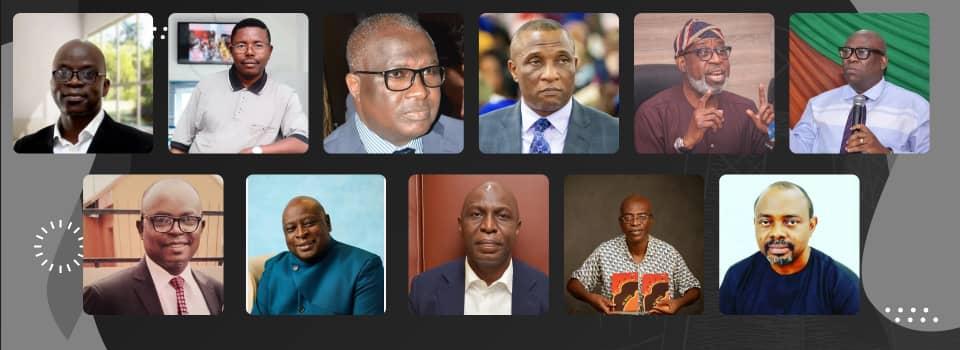
Other journalists honoured include Jenkins Alumona, Gbemiga Ogunleye, Muyiwa Adekeye, Babajide Kolade-Otitoju, Ike Okonta, Tunde Fagbenle, Oladele Alake, Olatunji Bello, Louis Odion, Segun Babatope, Sam Omatseye, Sir Ademola Osinubi and Bola Bolawole.
Also on the list are Lade Bonuola, Femi Kusa, Ose Osayande, Barrister Osa Director, Dr Niran Malaolu and Femi Aborisade.
Kolade-Otitoju, who was the former Editor of The News Magazine, was declared wanted for a cover story on the coup, but when he could not be found, a former editor of the magazine, Kunle Ajibade was arrested, tried and jailed along with Malalolu, Mbah and Charles-Obi.
Otitoju, now Director of News at Television Continental (TVC), is grateful to President Tinubu for recognising the risk he and other journalists took during the military era to put pressure on them to leave.
“I did a cover story titled Army clears coup plotters. If they had laid their hands on me, I could have gone to jail or been killed. They got hold of Ajibade, but couldn’t get the information they needed on me, who did the story. I kept moving from state capital to state capital. I was just moving around until God took Abacha,” Kolade-Otitoju recalled in an interview.
“There were so many risks one took at that time. It was only God who said I will not be arrested. When they declared me wanted and my mother read about it, she pleaded that I should go into exile, but I refused. Today we are happy to enjoy democracy, but only the people who were just a whisker away from death can truly appreciate the freedom we have today.”
Kolade-Otitoju’s other colleagues from The News on the award list are Jenkins Alumona, Muyiwa Adekeye and Ike Okonta. The weekly News published many investigative reports that unsettled the military governments, and many of its staff were arrested, detained and jailed at various times.
Bolawole, former editor and deputy editor-in-chief of The PUNCH, who was not expecting the award, recalls in an interview that Chris Mammah, a deputy editor of the paper, spent months in detention under the military junta of General Ibrahim Babangida.
“We had to feature him on the front page of PUNCH newspapers, daily, counting the number of days he had spent in unjust detention. I could also recollect that the count that we insisted on sustaining boldly on the newspaper’s front page seriously angered the Babangida junta.
“Another action of ours that unsettled them seriously was our “Countdown to Democracy”, which fell under my watch as the editor of The PUNCH/Saturday PUNCH. We carried the picture of two shackled fists on the front page, with the manacles broken in the middle. And we began to count: 200 days to go! 150 days to go! 100 days to go! I understand this unsettled the First Lady, Maryam Babangida, so badly that the junta sent emissaries to me to pull it down.
“We also took the military junta of General Sani Abacha, Babangida’s successor, to court. Indefatigable and irrepressible Gani Fawehinmi was our lawyer. I followed Gani to court to sign all the papers and swear affidavits at great personal risk and cost,” Bolawole said, noting that the former Chairman of the company, Chief Ajibola Ogunsola, also deserve an award for his support for the editors and staff.
Ogunleye, also a former editor and deputy editor-in-chief of The PUNCH, who was initially a staff member of The Guardian, which was shut down along with The Punch and National Concord, after which he joined AM News as Assistant Editor before joining The Punch, said he never gave it a thought that he would be given an award for his contribution to the return of democracy in the country.
Notwithstanding, he said he regards the award as a recognition and acknowledgement of the role The PUNCH, shut down for 14 months, played in one of the country’s darkest hours.
“The Punch, as you know, provided a voice for the voiceless in the battle to free our country from semi-literates who think the mere possession of guns entitles them to govern a people without their consent.
“I accept my award on behalf of Azu Ishiekwene and Remi Ibitola, two of my distinguished colleagues in the battle to free Nigeria from military dictatorship in our days at The Punch,” Ogunleye, now a legal practitioner and communication consultant, said.
Other awardees from The Punch are the former Managing Editor/Editor-In-Chief, Sir Osinubi and Former Editor, Deputy Editor-In-Chief, Bolawole and Columnist, Tunde Fagbenle. Punch ran a daring front-page countdown series on the exit of President Babangida, who reluctantly stepped aside after annulling the June 12 election.
Akinola, a veteran judicial editor and human rights activist, was a founding member of the Civil Liberties Organisation, the first human rights body in the country. The former Executive Director of the Centre for Free Speech was actively involved in various human rights campaigns and protests during the military regimes.
He dedicated his award to the over 140 protesters mowed down in cold blood on Ikorodu road by the Abacha soldiers while protesting the June 12 annulment.
Those from the National Concord, also shut down for 14 months, on the award list, are former Editor, Oladele Alake, presently Minister of Solid Minerals, former Editor, Olatunji Bello, now Executive Vice Chairman/Chief Executive Officer, Federal Competition and Consumer Protection Commission, Former Political Correspondent, Louis Odion, now Executive Director FCCPC, Former Chairman Editorial Board, Segun Babatope, Former Deputy Political Editor, Sam Omatseye, now Chairman Editorial Board, The Nation and former writer Ose Osayande.
Mr Bonuola and Kusa were the former Managing Director and Editor of The Guardian, respectively.
The paper was shut down on August 14 by the Abacha regime and proscribed following the publication of an exclusive report titled “Inside Aso Rock: The Raging Battle to Rule Nigeria.”
It was reopened in July 1995
The Kano correspondent for Dateline, a sister publication of Tell magazine, Osa, was arrested after publishing a story entitled “Buhari, Abacha at war over oil money”. The director was held in solitary confinement in Kano. He was charged in Kano after 34 days in detention, appearing before the magistrate in leg irons and handcuffs. He was charged with inciting discontent by publishing “false reports” contrary to sections 416 and 418 of Nigeria’s Penal Code. He was denied bail until October 1995. When bail was granted, he was ordered to report to the State Investigation and Intelligence Bureau’s office monthly and prohibited from publishing any material that could embarrass the government (1995).
*Bunmi Aborisade played a key role in the struggle surrounding the annulled 12 June 1993 presidential election. As editor of June 12 Magazine, he championed the validation of the election results. His courageous journalism led to his arrest and detention during this period. Following his release, he fled Nigeria and sought refuge in Ghana. However, the Rawlings regime expelled him, forcing him to relocate to the United States. While in exile, Aborisade continued to advocate for democracy and human rights in Nigeria, leading Nigerian Journalists in Exile and the US-based Nigeria Democratic Liberty Forum. Tragically, his mother, Emily Omope Aborisade, was attacked with acid in Ado-Ekiti in 2002 and died from her injuries in 2003. Aborisade has received numerous awards for his journalism, including the 2000 awards for Profile Writing and International News Reporting from the New York Association of Black Journalists. He has also authored several books, including “The Citizen Reporters” and “Everybody Say Ye’ Ye”: An organic novel on Fela’s Communication with humour (1993).
Before the new list of journalists given national awards this year, others have been awarded in past years.
Observers, however, note that many other journalists who should be recognised for their role in restoring democracy are yet to be honoured.
An updated list of more journalists who contributed to the restoration of democracy is expected when the final list promised by the presidency is released.
Outliving Abacha: Six Nigerian journalists’ prison stories | Refworld