
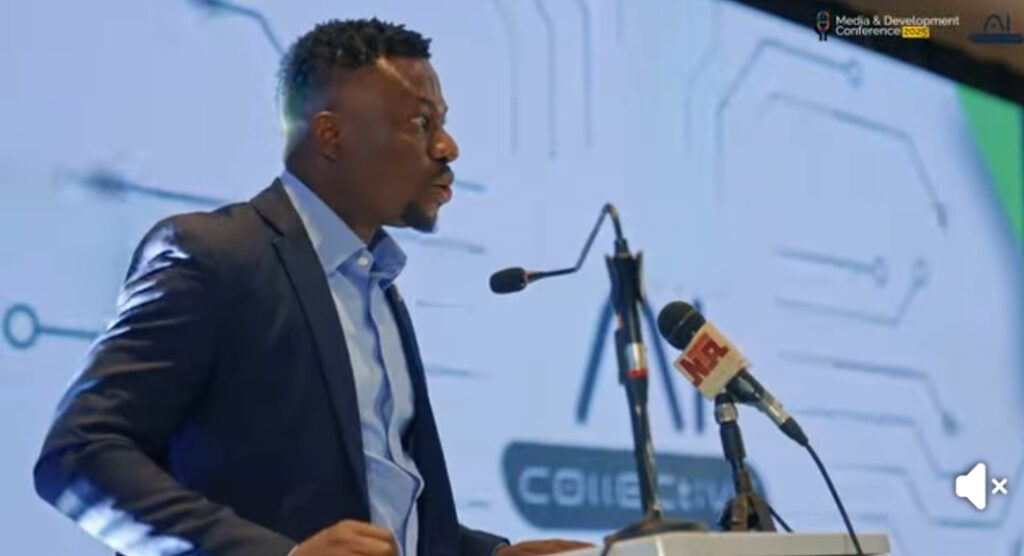
The AI Summit 2025 organised by the Center for Journalism, Innovation and Development (CJID) was a full-day dedicated to conversations on data ownership, fair compensation in the AI age, data sovereignty and the future of digital governance in Africa.
The Summit brought together thought leaders and key stakeholders, providing a platform to discuss locally-developed AI solutions, Africa’s control over digital infrastructure and data, fair compensation in the AI era, and strategies for inclusive innovation across the continent.
In her welcome address, the Vice President, Africa, of Luminate, Toyin Akinniyi stressed the need for media and civil society not to be passive observers of tech owners but active players and shapes adding that the role of every stakeholder should be in ensuring that technology, meaning artificial intelligence, serves people never the other way around.
“As we look ahead, the next decade will be defined by choices we make today. Do we allow AI systems to deepen existing inequalities or do we design them to expand opportunity? Do we accept opaque, unaccountable technological power or do we build transparent participatory governance?
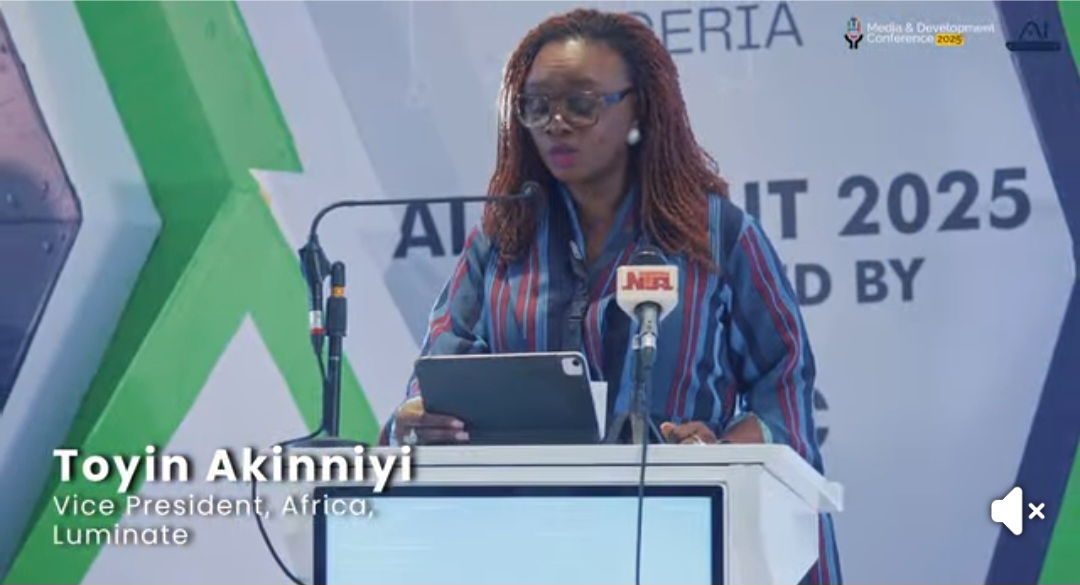
“Do we allow democracy to be shaped by forces outside our control or do we mobilize citizens, institutions and knowledge communities to shape our own futures? The answers to these questions will not come from government. They will come from technologists alone, not from the media or even funders. They will come from collective action, from spaces like this where diverse perspectives meet, challenge each other and build shared solutions.”
The opening session on “Nigeria’s AI Collective – One Year On,” moderated by Oluwapelumi Oginni, Manager, AI Initiatives at CJID, reflected on the Collective’s first year, highlighting its progress, achievements, and challenges. The Panelists also spoke on the critical role of collaboration across civil society, academia, media and the AI ecosystem.
The discussion also showcased how the Collective has supported public service leaders in ethical AI governance, inspired young creators to innovate and experiment with AI solutions, and opened new pathways for learning, experimentation, and participation, reinforcing its mission to drive ethical AI governance, innovation, and capacity building in Nigeria.
There was a research presentation on a multi method analysis of locally-developed AI models built to empower journalists in Nigeria. Using a multi-method approach, the research examined how these tools are built to address the unique challenges of Nigerian media, indicated how functional and usable these locally developed AI tools are for journalists, its goals and how the goals allignee with the functionality of the tools. The research also highlighted the potential of homegrown innovation in strengthening journalism.
“The local tools must reliably achieve their promised functions because usability and functionality drices acceptance and mass adoption will follow only when the tools meets or surpasses global alternatives”,the conclusion of the research read.
A range of locally-developed AI tools, including SourceMap, TruthNet, and NewsBridge were showcased.
The first panel session on “who owns the data? Fair compensation in the AI age” moderated by the CEO of CJID and Publisher of Premium Times, Dapo Olorunyomi, had panelists which include Chioma Agwuebo, the Executive Direcyornof TechHerNG, Kioto Shilongo, Senior Tech Policy Fellow, Mozilla Foundation, Dr Oluwaseun Adepoju, Managing Partner, CCHUB, Seyi Olufrmi, Country Director, NUBIA AI and Kwabena Offei-Kwadey, IT Manager, Quantum LC Company Limited.
The conversation was enlightening and thought provoking as the Panelists discussed how AI is built on human creativity and intellectual labor, the challenges of ensuring contributors are properly recognised, and the importance of fair compensation and ethical frameworks in guiding the responsible use of data.
Chioma on her part stressed on the need for communities to be empowered in taking caution on how they share their data and to know that when they share their data, what the data can be used for and how it can be weaponized against them.
“We are not just losing our privacy, we are losing our standing and that is very dangerous. There is so much harm we are exposed to as our data ate collected without our knowledge and it is being manipulated by people who are using it. It is sad that they are taking our data, they do nit pay is and these AI tools that have been trained on our language and our ways are now being used to discriminate against us. Education about data is very important.”
On his part, Adepoju said that whoever controls the data controls the direction and value of AI stating that Nigeria made a mistake with crude oil and cannot afford to make the same mistake with data.
Shilongo harped on the protection of data insisting that it is not everything an individual should upload on the AI tools especially the LLMs pointing that the sovereignty of data lies with the individual and they should not trust the big techs to protect their data for them. He also noted that Africa cannot build a very impactful AI ecosystem without the infrastructure of data.
“In the near future we will get erased, our culture and our nature will be erased if things continue to go the way it is going. We need to invest in the businesses, the young people and the places where innovation is happening so that we can tell our own stories and not leave them all for the big techs.”
In the second and last panel session on ‘Digital Sovereignty and the Future of Digital Governance in Africa,’ the panelists include Dr Toyosi Akerele-Ogunsiji, the CEO, Rise Network, Gabreal Odunsi, Programme Manager, TechSocietal, Kashifu Inuwa Abdullahi, Director General, National Information Technology Development Agency (NITDA), Timi Olagubju, Partner, The Timeless Practice and Dr Vincent Olatubji, National Commissoienr, Nigeria Data Protection Commission (NDPC).
The experts explored how the continent can reclaim its digital space, empower youth with AI and tech skills, ensure transparency and accountability in technology, and build homegrown platforms that serve citizens, strengthen governance, and drive economic growth.
It was also emphasized that, Africa’s digital future depends on informed policy, innovative design, and the active participation of its young innovators to achieve the growth it hopes to see.
Closing the summit, the CEO of CJID, Dapo Olorunyomi appreciated the participants for attending the summit and contributing to the discussion on hoa Africa can face the future with confidence reminding the participants that the future of the African continent belongs to those willing to shape it with courage, knowledge, and ethical purpose.
He noted that the discussions were around important issues which everyone will need to reflect effectively about pointing that if democracy will work, if government will work, if the data for the next decade, for the next century will work, it must be based on a very ethical, inclusive, something that also brings ethical values of truly, truly empowerment to our people.
“The conversations on democracy, development, data, agency, and sovereignty affirmed that progress will only serve the common good when communities, institutions, scholars, and young people build it together, as we imagine a world where innovation is inclusive, governance is responsible, and people are truly empowered.”