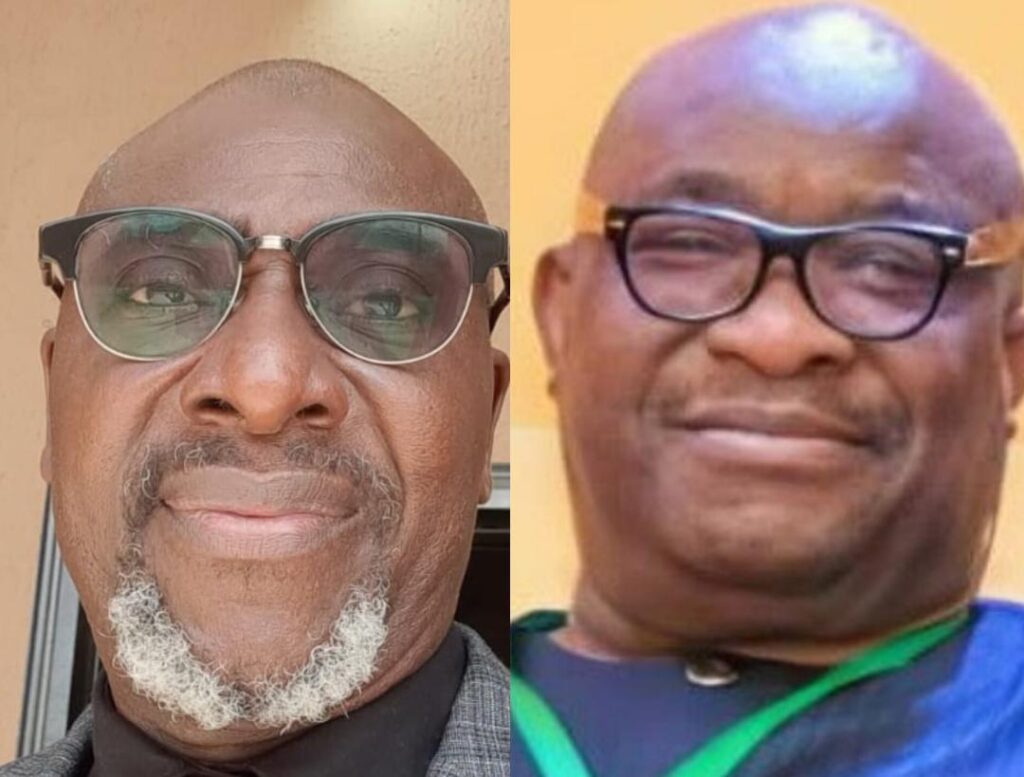
Former Deputy Provost of the Nigerian Institute of Journalism (NIJ) Dr Dele Omojuyigbe, writes on his one year work experience at the Daily Times Newspaper.
Daily Times was a training ground for me. The day I resumed work there, I was also asked to start work at two soft sell magazine outfits as a staff writer. My sister and her husband had to rescue me from the dilemma of choice. They advised me to pick Daily Times for its name, history and influence, so that I could go there and learn. And that was exactly how it was. I chose Daily Times with that mindset, and I learned.
Coming from a language background, I found myself in an environment where language use was slightly in contention with what I was taught at the University. I had to start learning how to write for the media. I learned from my senior colleagues and also from my contemporaries. I learned typing and page-planning, just for my personal development.
I paid a colleague, a sub-editor, to teach me page-planning while I attended a typing school after closing from work in my early days to learn typing. At that time, typewriters were available almost on every desk for whoever could type. I knew my limitations as I didn’t have training in journalism, and I needed to fill the gap. It was later that I obtained a postgraduate diploma in it.
Daily Times taught me magazine writing through the Times International magazine published by the company. Mr Dayo Alao was the editor. He accepted me as a freelancer, and I studied how journalists under him were writing. To help myself further, I bought and read old editions of Time Magazine and Newsweek to enhance my magazine writing skills.
Daily Times was a veritable platform for learning because it had many publications. That time, if you wrote for any title within the group, but outside your own paper, you would be paid. That encouraged me to write consistently since I was getting paid.
Mr Chinaka Fynekontri, then editor of Lagos Weekend, liked me. I wrote a story for his paper. He investigated the report and discovered that it was true. From then, he allowed me to contribute regularly to a column in his paper, “Do not say I told you”. And he was paying. I learned entertainment reporting from him.
I wrote regularly for the Daily Times newspaper: features, opinion articles and news-feature stories for “Midweek Times”. I wrote for the Sunday Times, Evening Times, Saturday Times and Business Times too. It got to a point that the motivation to write was no longer the bylines I got but the stipend I was paid every Friday for the stories.
Each Daily Times publication was distinct in style. I had to study the ones I wrote for to be in line. My own paper, Headlines, a historical journal, exposed me to thorough research.
I had information on old and fresh events as I made use of the library daily to get stories for the paper. One had to read again and again. Along the line, I stumbled on other priceless information which has helped me in my media journey.
At Headlines, we were few. We did everything together, especially production — proofreading, supervision at stone desk, compu-graphy and lithography. They helped me not only in the newsroom but also as a journalism lecturer. For three years after I left Daily Times, I produced my own journal, COLLEGE REPORTS, all alone.
I can’t forget Major Gideon Orkar’s coup in April 1990. It happened on our production day. I lived in Festac, and I could not get transport from Festac 3rd Gate to Agidingbi. The road was deserted because it was close to Ojo Barracks. I missed production that day, and my editor was angry.
He got to work from Satellite Town, but he had a car. He issued me a query, saying that I should have trekked to the office. It was an eye-opener for me. And that was the only production I missed throughout my stay at Headlines, leaving me with a lesson on how to endure hardship in the business.
READ MORE DAILY TIMES @100 RECOLLECTIONS