
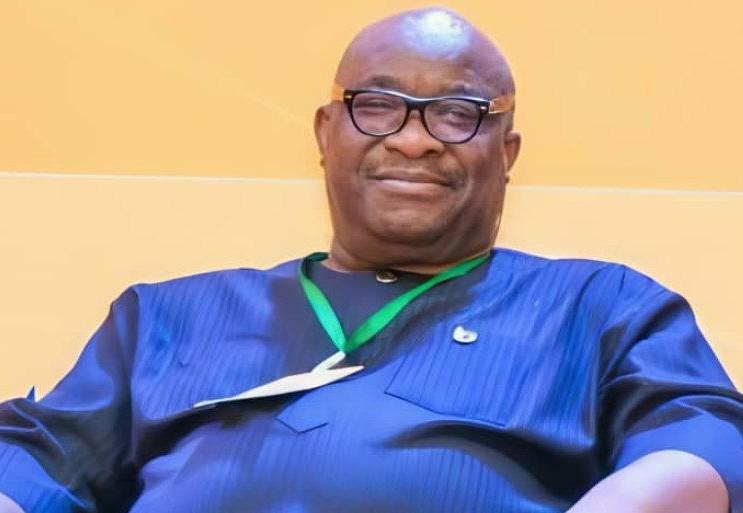
On the fifteenth anniversary of the signing of the Freedom of Information Act into law, we asked the Executive Director of the Media Rights Agenda (MRA), Mr Edetaen Ojo, if there has been an improvement in the use of the act by journalists and how it can be effectively used.
The potential that the FOI Act holds for journalists and the media is almost without limit.
Although there have been noticeable improvements in recent years in the use of the Act by journalists and media organisations, the extent to which the media is using the Law still falls far short of expectations, especially given that the primary purpose of the Act is about seeking and obtaining information, which is the core business of journalists and media organisations.
One important improvement we are seeing is the growing awareness among journalists of the FOI Act as a practical tool for reporting and investigation. We are noticing increasing utilisation of the law among journalists, particularly for investigative reporting. We are also seeing an increase in the use of documentary evidence in journalism.
More journalists and media organisations seem to be relying on official records, procurement documents, budget data, audit reports, and other public records obtained through FOI requests to support their investigations and conduct fact-based reporting. This is resulting in greater scrutiny of public institutions.
Without a doubt, compared with the years immediately following the enactment of the Act into Law in 2011, there is clearly more awareness by journalists, more use of FOI-based reporting techniques, and stronger recognition of access to information as an essential part of investigative journalism.
At the same time, however, I believe that the FOI Act is still underutilised by journalists when you consider its potential. Many journalists have not yet fully incorporated FOI requests into their routine reporting practices.
Journalists can make much greater use of the Act by integrating it into their everyday reporting processes rather than treating it solely as a tool for major investigative projects. The most effective journalists in jurisdictions with access-to-information laws use such laws routinely to verify facts, obtain official records, and enrich ordinary news coverage.
Instead of relying exclusively or excessively on press releases, official statements, press conferences, or even anonymous sources, journalists can routinely seek supporting documents through FOI requests regardless of the beats that they cover. They can request budgets, contracts documents and other procurement records, implementation reports and monitoring reports, which will help them to move reporting from the dominant claims-based journalism that we frequently see in the media to evidence-based journalism.
Many journalists tend to use the Act only after a scandal has occurred. But I believe that a better approach is preventive reporting by routinely requesting information that enables journalists to detect problems before a crisis breaks out.
Media organisations can, in fact, encourage and facilitate greater use of the Act by designating specific reporters or units and departments that will be responsible for drafting requests, tracking responses, sharing the responses obtained across the newsroom, and generally coordinating the use of the Act by the organisation. Such an FOI desk or unit can become a valuable source of exclusive stories.
I strongly believe that journalists have a very important role to play not only in reporting with information that they have obtained through FOI requests, but also in tracking and reporting on which institutions are responding and which are not, which public institutions are routinely missing the timelines provided in the law and which institutions complying with their other obligations such as submission of annual reports, designating FOI Desk Officers, training their personnel, meeting their proactive publications obligations, and so on. By also playing such monitoring roles, journalists can encourage and foster greater compliance across public institutions, which will improve transparency and accountability in governance.
One of the most effective uses of FOI laws by the media around the world is tracking public expenditure. Journalists in Nigeria can similarly routinely request contract awards documents and other procurement records, budget releases, project implementation reports, audit findings, and expenditure breakdowns. Such financial records often reveal stories that official statements do not or may in fact set out to hide.
Reporters who cover specific beats can develop standard information requests that make them more prolific reporters, but also ensure that they are producing more accurate stories. For instance, a health report could routinely request drug procurement records from relevant institutions, ask for the budgets of health facilities, maternal mortality statistics, and disease surveillance reports, while an education reporter can similarly routinely request school funding records, teacher recruitment data, examination statistics, infrastructure budgets, and details of school feeding programmes, among others.
We find that government officials and politicians in general are frequently making unsubstantiated claims about their achievements or progress made. Ahead of elections or at any other time, journalists can use the Act to verify some of such claims, including, for instance, about completed projects, employment programmes, infrastructure development, and social interventions, among other claims, to strengthen fact-checking and public accountability.
I believe that the greatest unrealised potential of the FOI Act is making it a routine journalistic tool rather than an occasional investigative mechanism. When journalists regularly seek official records, budgets, contracts, audit reports, and performance data, they produce more accurate, more authoritative, and more impactful reporting.
Over time, this will also help develop a culture of transparency within public institutions and strengthen democratic accountability