
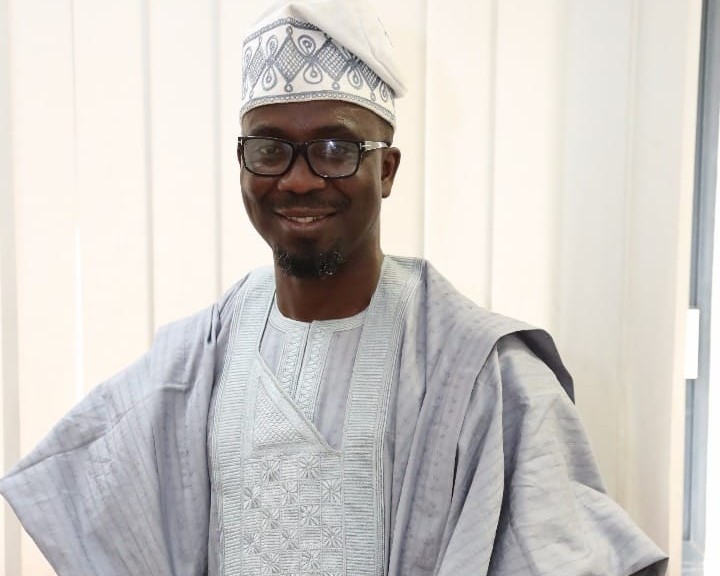
Former Sunday Editor of THISDAY Newspaper, Alhaji Yusuph Olaniyonu was Commissioner for Information in Ogun State and later Media Adviser to the Senate President. In this 60th birthday interview with Lekan Otufodunrin, he shares his key life and career lessons.
Clocking milestone ages comes with some unique feelings. What does marking your 60th birthday mean for you?
I have looked forward to July 30th, 2026 the day I turn 60 more than any other day. Maybe this was as a result of my recent experiences – surviving a very serious illness and losing my spouse. However, turning 60 means another grace of the Almighty Allah (SWT) has been extended to me. It means that I have to rededicate myself to my maker. It means I have to keep myself fit, hale, hearty, and strong. It means I also have to admit that, even though I have many more senior members in my immediate and extended family, as well as in the community, one is also moving into the ranks of the elders. More importantly, as a Muslim, it means one is moving closer to one’s grave and therefore one should be closer to one’s maker, the giver of life. All glory be to Him.
Looking back, have you been able to accomplish the life and career dreams you had since you started working?
I started working full-time after my National Youth Service at the age of 23. This means I have worked ceaselessly for 37 years of my life. Almighty Allah (SWT) has been good to me. I reached the peak of my profession when I was appointed title editor in 2005. I studied law and became a lawyer in 2006 because I was looking for something to retire to, something that would enable me to be on my own and be self-employed when I leave journalism. I have failed to realise that dream. It is unfortunate that I still do not have something that I can say has enabled me to be self-employed. I also thought that I would have completed a PhD programme earlier in my life. Taking political office derailed that goal. I am just struggling to get that dream back on track.
What principles have guided you in coming this far in life and would recommend to others, especially younger persons?
I have always believed in hard work, learning more and more at every turn or in every opportunity that presents itself, and being close to God. I believe these three principles have helped me and I want to recommend this to every young person. Also, today’s young people should marry good spouses who can support their dreams and complement their efforts. They need somebody who can hold the home front and make it as solid as ever. However, the efforts and contributions of a spouse must always be reciprocated. Also, having good role models, reading widely, and sustaining good and great contacts (positive networking) are important measures for success.
How would you describe your journalism career over the years and major accomplishments you want to recall?
I started journalism as a reporter/researcher and in the newsroom of a top-class news magazine where everybody was a university graduate and I was the only one who attended a polytechnic. However, I believed that presented a challenge for me to defend my certificate, the honour of the great institution that I attended, and the competence of the great lecturers that I passed through. I believe I did a good job of that as I got promoted every year in the four years that I spent there. This spurred me to later study and obtain several university degrees.
Though, I covered several beats at the initial stage of my career, I had consistently been on the political desk throughout my career until I became Group News Editor, later Deputy Editor (Daily) and Sunday Editor. As political editor, I covered and witnessed almost all the events surrounding the Babangida transition Programme, the pre and post-June 12 events, and the process that led to the final return of democracy in 1999. At a time in this period, I could boast of being one of the foremost political reporters in this country and the go-to man for the most informed political intelligence and analysis in this country. I won the 1994 and 1995 editions of the Political Reporter of the Year Awards in the Nigerian Media Merit Awards and the 1996 edition of the Diamond Award for Media Excellence (DAME).
As political editor, I broke many stories and got many exclusive stories published with my byline. I remember I was the one who first reported that the Abacha administration had instructed all five political parties of the period to go and nominate the military head of state as their respective sole presidential candidate. When I brought the story to the newsroom, the editor, Mr Victor Ifijeh, was so surprised but he did not doubt that I always got it right because I had very reliable sources. He reported to the chairman, Mr Nduka Obaigbena, who was in exile in the UK then. The chairman called me on the phone and asked who my source was. I asked him if he felt the office telephone was safe enough for us to exchange that sensitive information. He directed me to go ahead and speak. When I mentioned it. He directed that the newspaper should go ahead with the publication of the story. It was after THISDAY broke the story and it became the subject of public discussions that other newspapers started mentioning it as part of their analysis and background information. I went through a series of training programmes, some conducted by experienced foreign professionals and journalism teachers. Overall, I had a fulfilling reportorial career. Also, as an editor who was then consigned to the newsroom, it was an exciting experience. Alhamdulilahi robil Al-Ameen.
You have served as a Commissioner in Ogun State and Media Adviser to the Senate President. What have you learned serving in the non-journalism positions that you think journalists should know about?
In those public offices that I held, I saw first-hand how difficult governance can be in this country. I experienced how difficult it is to get positive news about government achievements circulated through the media. Conversely, it is easy to disseminate negative news about government. Also, I experienced what damage journalists can do to individuals through their failure to do simple due diligence before the publication of a story. I saw how correspondents in the States (those out of the headquarters) deliberately and unethically do damage to the reputation of individuals.
For example, one correspondent of a newspaper in Lagos did some mischief against me. One Monday, my governor decided to shut out late comers, those who were workers and political appointees who reported late to their offices in the Governor’s Office where all the Ministries, Departments and Agencies are located. As for me, there was no way I would get to the office late. My official house then was about five minutes drive to my office in the Governor’s Office. I was with the governor till late on Sunday and I could always second-guess him. I knew he would most likely do the shut-out exercise that Monday. Again, we were going to have an executive council meeting that Monday morning. So, I had to get to the office very early. The staff in the Ministry of Information knew that except on the occasions that I was invited to Government House early in the morning, I would get to the office before 8am or thereabouts. This particular day, I was in the office when my press officer told me that the Governor had ordered the gates to the Governor’s Office shut and I went to the balcony to have a look at the people and the long line of vehicles massed far away at the other side of the gate.
One of my colleagues whose official vehicle was of the same colour as mine was caught up in the lock-out. The person actually drove to Abeokuta that morning from Lagos where she had gone to spend the weekend with her family. This mischievous reporter after seeing the person’s official car among those on the other side of the gate just concluded I was the one caught up in the lock-out. Maybe somebody just hinted to him about the vehicle with the colour similar to that of the Commissioner for Information and the following day the story was published in his newspaper and I was mentioned as one of the late comers. A friend of mine called me from Lagos to inform me about the story. This was pure falsehood. It was a big embarrassment for me. I called the reporter to inform him about the gaffe that he committed and I left him to his conscience. However, that incident. made me learn how public officials feel when false reports are published about them. This reporter could have walked some 700 meters from the gate to the Ministry of Information to check if I was in the office. He would have seen my official vehicle neatly parked at its designated place in the Ministry’s car park. He could also have called to seek clarification from me. He did not do any check but went to town with false information.
What have you had to do to advance your career to get to where you are now?
I try to utilise my free period to read, study within an academic environment, and advance my knowledge or acquire higher qualifications. I went through a degree course that took me six years to complete. At one time, I was working and living in Lagos while studying for a post-graduate degree at the University of Ibadan. I did all that without having to give any excuse about my situation or the challenge I faced. I was appointed Sunday Editor of THISDAY a few weeks after I commenced my studies at the Nigerian Law School, Lagos campus. I have learnt that one will always have time for whatever one is determined to accomplish. I refuse to accept or create any room for any abandoned project in my life. I thank God for always seeing me through.
What future aspirations do you still have?
I hope to earn a doctorate. I hope I can teach at some level to impart knowledge to the younger ones and probably start some consultancy service. I want to still go into full law practice. I want to perfect my reading and understanding of the holy Quran.
What advice do you have for journalists to do their jobs better.?
Journalists should be strong on ethics. Journalists should avoid seeking to lead the life of affluence and opulence that some of the people they cover or interview live. Journalists should also work to improve their personal economy, but through legitimate means. They should try to invest from their little earnings and relate with people who can rightly guide them in this endeavour. Journalists should seek knowledge, particularly about the subject areas related to their beat. They should seek to develop and cultivate very reliable and knowledgeable sources, contacts, and friends.
Also, a journalist should always be sceptical. The person giving you information is not always altruistic. He has a motive. Is the motive something that can be made to serve public or national interests? Like the Rotarians ask, is it for the common good and will it serve positive causes?
Your advice for journalists in government and those seeking appointments?
If you think taking government appointments or public office will make you better financially, you are far from the reality. Also, when you get into government offices, don’t get used to the luxury of living in government accommodation or official vehicles. Always know that all these things are temporary. Be sure to only get used to what you can afford when you are outside office. Also, put in your best in those offices and conduct yourself with dignity.
Many people in government from other professions do not have high regard for journalists. You must serve as a good ambassador of the profession and be ready to defend your profession at all times and in all situations. Journalists in government should also know that they will always need their colleagues in the newsrooms. So, don’t cut them off, both when you are in office and out of it. Your bosses in government will respect you for as long as they know you have a huge clout in the media.
Any other issue you would like to share your views on?
I believe journalism nowadays is a lot easier to practice than when I was very active in the newsroom. Technology has made things easier for current practitioners. Also, there is the present challenge of competition with those called citizen journalists and the self-styled bloggers. A journalist should therefore be very creative and always thinking about what stories to pursue that will set his publication or his byline apart from the numerous others. He should be a thinking machine. He must have the interest of the job at heart and must have the determination to make a difference.
READ ALSO: I have surpassed my expectations – Odunuga