
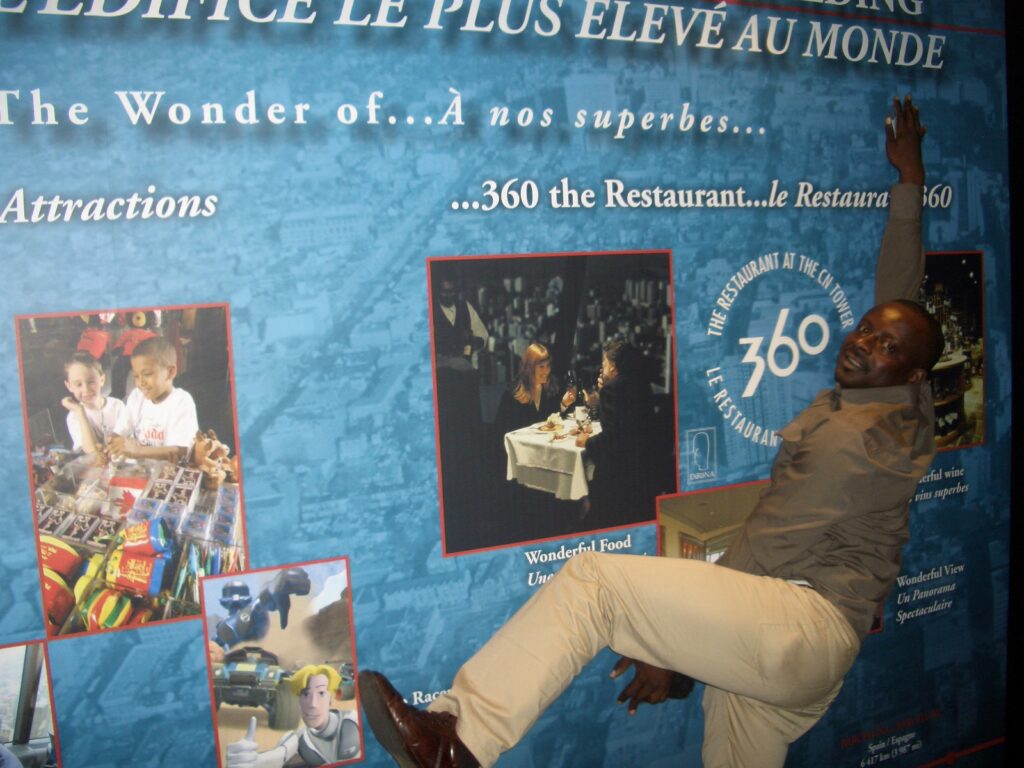
O’Femi Kolawole, Founder/CEO, POSTERITY MEDIA, who served as Programme Associate, Research and Communication, Journalists Against AIDS, (JAAIDS) between 2006 and 2008 pays tributes to the late founder of JAAIDS, Omololu Falobi.
October 5, 2006 remains one of those dates I will never forget. It was the day Omololu Falobi, my boss, the Founder and Executive Director of Journalists Against AIDS in Nigeria (JAAIDS), was shot and killed around the Kollington-Alagbado area of Lagos while on his way home after the day’s work and activities. He was only 35. It was shocking, painful, devastating and totally unexpected.
I joined JAAIDS in May 2006 as Programme Associate, Research and Communication. By then, I had known Omololu for about three years. In 2003, JAAIDS had given me double recognition at the Red Ribbon Awards on HIV/AIDS Reporting at Excellence Hotel, Ogba, Lagos, for my work as a reporter with The Week, which I had joined in 2001, a magazine edited then by our amazing and remarkable editor, Mr Simon Kolawole. Three years later, I found myself working in the organisation founded by the man whose work I had admired.
But before JAAIDS, Omololu had already established himself as a respected journalist at The Punch . He rose to become Features Editor of Sunday Punch, where he distinguished himself as a thoughtful journalist with a strong interest in issues beyond the routine demands of daily news. He eventually left Punch in 2000 to devote himself fully to the work he had begun around HIV/AIDS advocacy.
Omololu’s years at Punch were also significant because he was already seeing the possibilities of technology and the Internet at a time when these were still relatively new to Nigerian journalism. He was among the earliest journalists to make serious use of personal computing and online resources, and he understood quite early that journalism could be more than writing stories for the next day’s newspaper. Omololu discovered fast that it could be used to build communities, share knowledge and drive social change.
JAAIDS was a great organisation with a good governance structure and a team of brilliant people, including Olayide Akanni, Folasade Fijabi, Kingsley Obom-Egbulem, Bimbo Adewunmi, Ogechi Onuorha, Tayo Falobi, Justina Nwaeze, Faith Anao, and this writer, among others.
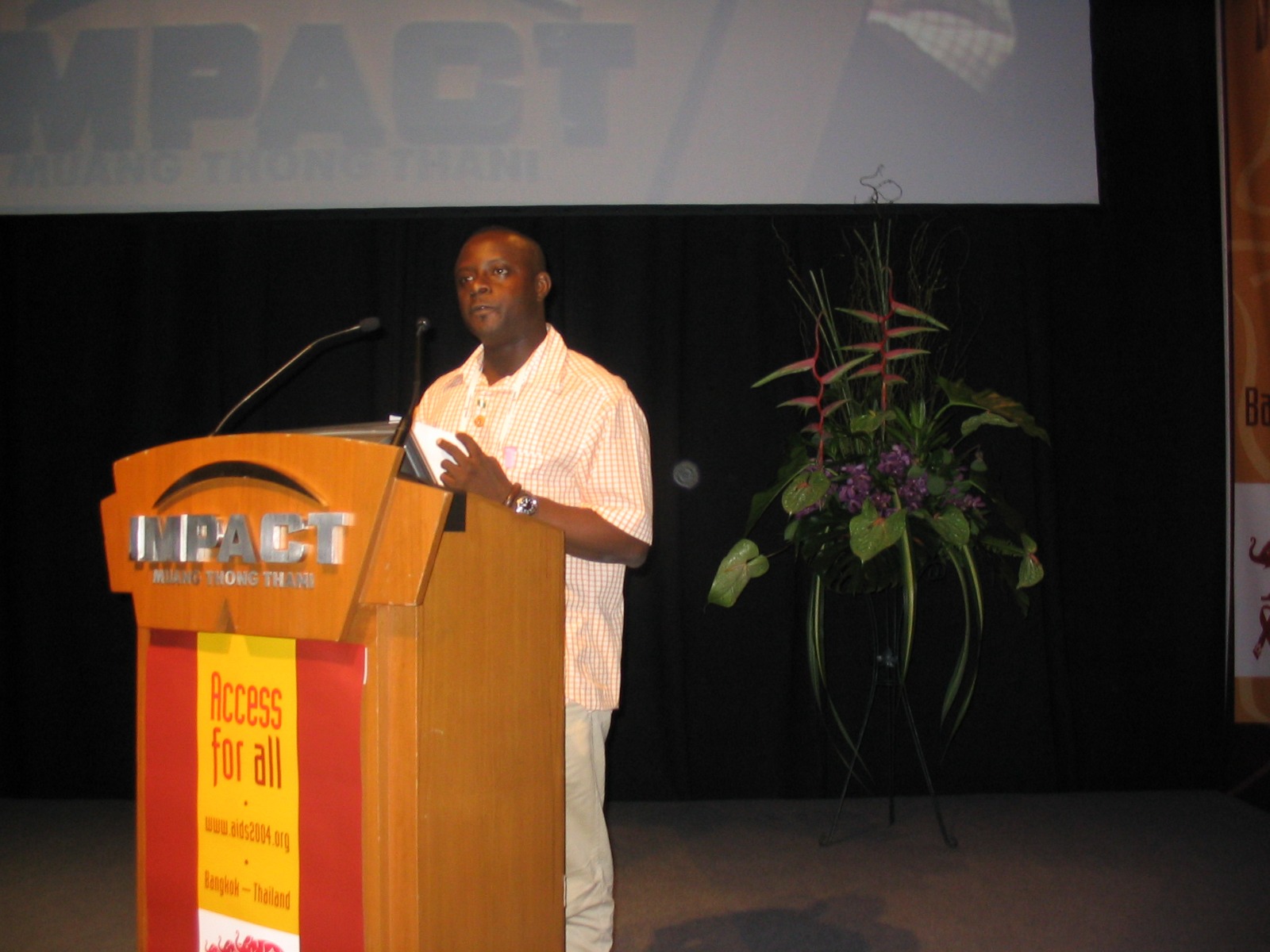
Omololu was a gentle man, brilliant and well travelled. He truly saw the world, spoke at high-level conferences and summits in different parts of the world and had what I would describe as curious and knowing eyes.
He was a fantastic organiser and mobilizer who built a vast network of friends and contacts in different countries. He was a shining star who made other growing stars around him comfortable. He made nobody feel less. He had no airs around him at all. He was a cool guy, stylish and fashionable too.
Shortly before he was killed, a foreign documentary crew came to JAAIDS to interview him in his office. I walked in that afternoon to discuss something with him and met the crew, who greeted me warmly. Omololu appeared surprised that I knew them. A few weeks earlier, they had interviewed me privately because I was one of the 10 nominees and finalists for the 2006 Against All Odds Awards organised by The Aart of Life Foundation founded by Chief Mrs Taiwo Taiwo. The respected Nollywood actress, Mrs Joke Silva, whose highly-respected husband, Nollywood legend Olu Jacobs, was buried a few days ago, was on the board that interviewed me for the awards.
Later that day, Omololu asked me how I knew the crew. I explained everything. He was pleasantly surprised and said something that has stayed with me for 20 years. He said although we had been working together, he had not really taken time to know much about me. He told me we should find time to sit down and talk properly. I was happy at his interest and looked forward to it. Painfully, we never did. Within weeks, he was dead.
Most of us who worked in JAAIDS did not know until the following morning of his killing when we got to the office. It was a devastating blow.
But in the midst of the tears and sorrow, there was work to do. JAAIDS had to issue an official statement. I reached out to my immediate boss, Kingsley Obom-Egbulem, who was on leave and recuperating. We discussed it, I drafted the statement, he read and finalised it, and I sent it by email to media organisations while visiting some others.
To my utter shock, I discovered at a media house that one of its photographers had been at the scene where Omololu was killed the previous night and had taken photographs, including photographs of him being placed in the vehicle that took him to the mortuary.
I wondered how the photographer got there so quickly and why the circumstances surrounding what he had seen had not been shared with JAAIDS.
I was further surprised that, while the newspaper was preparing its story, nobody had thought to call JAAIDS for information or context.
As a journalist and media professional, that troubled me.
Fortunately, an editor showed me the photographs and said the statement I brought would help their report. I returned to our office and told my colleagues. They were shocked too.
When something terrible happens to one of our colleagues, how do we as journalists respond to one another? I felt there should surely be room for professional solidarity and humanity alongside the legitimate pursuit of the news.
I still wonder whether the photographer had information that could have helped the investigation if it had been shared with JAAIDS.
Twenty years later, the identity of the people who killed Omololu remains unresolved. The police promised to find his killers. That promise, sadly, remains unfulfilled. As far as I know, not once did they even visit the office to conduct any investigation or interview any of us who were his colleagues, if perhaps there could be some information that could help their investigations.
It is sad. But this is the country we live in. A respected journalist, Dele Giwa, was parcel-bombed in his home. Decades later, his killers have not been found or punished. We also had a Minister of Justice and Attorney General of the Federation, Bola Ige, who was killed in his bedroom and till today, Nigerians don’t yet know who killed him. This is what has been allowed in our country. But for how long must this be?
Who killed Omololu Falobi? Why did he have to be murdered?
Omololu’s work, however, was far bigger than the circumstances of his death. He was one of the early Nigerian journalists and advocates who understood the power of technology and online journalism. Through JAAIDS, the Nigeria AIDS eForum and other initiatives, he used communication to fight HIV/AIDS, challenge stigma, support treatment-access advocacy and connect people working in the field.
He was also involved in the Nigerian HIV Vaccine and Microbicide Advocacy Society and represented African civil society at high-level global HIV discussions. UNAIDS and other international organisations recognised the importance of his work and paid tribute to him after his death. His name has also continued through the Omololu Falobi Award for Excellence in HIV Prevention Research Community Advocacy.
The story of his burial in Iwoye-Ijesa, in Oriade local government area of Osun State, is another story I can never forget. Seeing his old mother confronted with the corpse of her star son was painful. His wife, Aderonke, was pregnant with their third child. When the casket was opened before the interment, watching her rest on the body of her husband, while the children were also to see their father for the last time, was simply unbearable. I didn’t leave the gravesite on time. I waited till the grave was covered before joining colleagues and mourners at the family house of the Falobis for us to make the journey back to Lagos that late afternoon.
The journey back to Lagos was also unforgettable. One of the mourners from Lagos who was present at the burial, Mr Akin Jimoh, a man who had also distinguished himself in journalism and advocacy, was involved in an accident along the Lagos-Ibadan Expressway and had to be rushed to the Ogun State University Teaching Hospital (OSUTH) in Sagamu that evening.
His jeep had developed a mechanical fault and needed to be towed. He had engaged a towing vehicle. Another great Nigerian journalist and activist, Mr Tunde Aremu, was with him. Jimoh and the towing vehicle driver were trying to get things moving when they were both knocked down by a hit-and-run Camry car.
In the course of escaping from the scene, the driver passed through a police checkpoint which was a few metres away. The policemen couldn’t see that there was something highly suspicious about the way the car was moving. It was full of about four to five men inside, with music blaring. The driver drove dangerously, overtaking other vehicles on the queue and speeding off through where the policemen were checking particulars. I was baffled that the police officers didn’t suspect anything could be amiss.
After the private bus we hired for the journey had stopped to intervene in the situation, we tried waving our hands frantically from the distance where we were to alert the police to the vehicle but no one among them saw our signal.
And right by the police, a driver who had knocked down two people and almost killed them, escaped easily. Akin Jimoh suffered a broken leg and would spend some time receiving medical treatment. Luckily, he survived and fully recovered after spending several months in the hospital.
The memories of all that happened still bring pain. But Omololu gave me opportunities I would never forget. JAAIDS improved my professionalism in communications and advocacy and gave me opportunities to participate in international meetings in Switzerland and Ethiopia and to make presentations.
I left JAAIDS in December 2008, two years and two months after his death, for other professional pursuits. I remain grateful to two amazing women, Olayide Akanni and Folasade Fijabi for their steadfast leadership in sustaining the organisation and Omololu’s vision for many years afterwards, alongside people such as Mr. Lekan Otufodunrin, one of Omololu’s close friends and professional colleagues, and Sanmi Falobi, his younger brother.
Today’s young journalists in Nigeria and Africa will do well to learn about Omololu Falobi. His life is a testimony of what can happen when journalism is connected to purpose. Omololu did not merely report on HIV/AIDS; he built platforms, trained people, advocated for those affected, challenged stigma and helped put African voices into global conversations. He saw the potential of the Internet at a time when it was still new in Nigeria. He was thinking ahead.
I often wonder what Omololu would have achieved if he was still alive now. For me, his genius was not in doubt. What would he have done with today’s technology? What institutions would he have built? How many young journalists and advocates would he have mentored? We will never know. And that, I believe, is why remembering him matters. I am truly proud to have met and worked under this great man.
Omololu celebrated me. The first time my photograph was published on a newspaper page was with him. I kept that paper till today. He gave me a chance and opened a door for me professionally. His life was surely a blessing to humanity.
Today, I remember not only the circumstances of Omololu’s death but how he lived. He was a journalist, an advocate, builder, colleague, husband, father, son and friend. He was my boss. And sincerely, one of the finest of bosses!
Dear Omololu Falobi, you were a great man. I am humbled, honoured and privileged to have worked with you. You made a global impact. You left too soon, but you did not leave empty-handed. You left a lovely family, ideas, institutions, those you trained and mentored, and a legacy that continues to speak.
Continue to rest in peace, my boss and brother. Twenty years later, we remember you, and we will not forget.
Ever!
O’Femi Kolawole, Founder/CEO, POSTERITY MEDIA, served as Programme Associate, Research and Communication, JAAIDS, between 2006 and 2008.