
What does it mean to be a journalist in an age of artificial intelligence, misinformation, military rule, legal intimidation and shrinking press freedom?
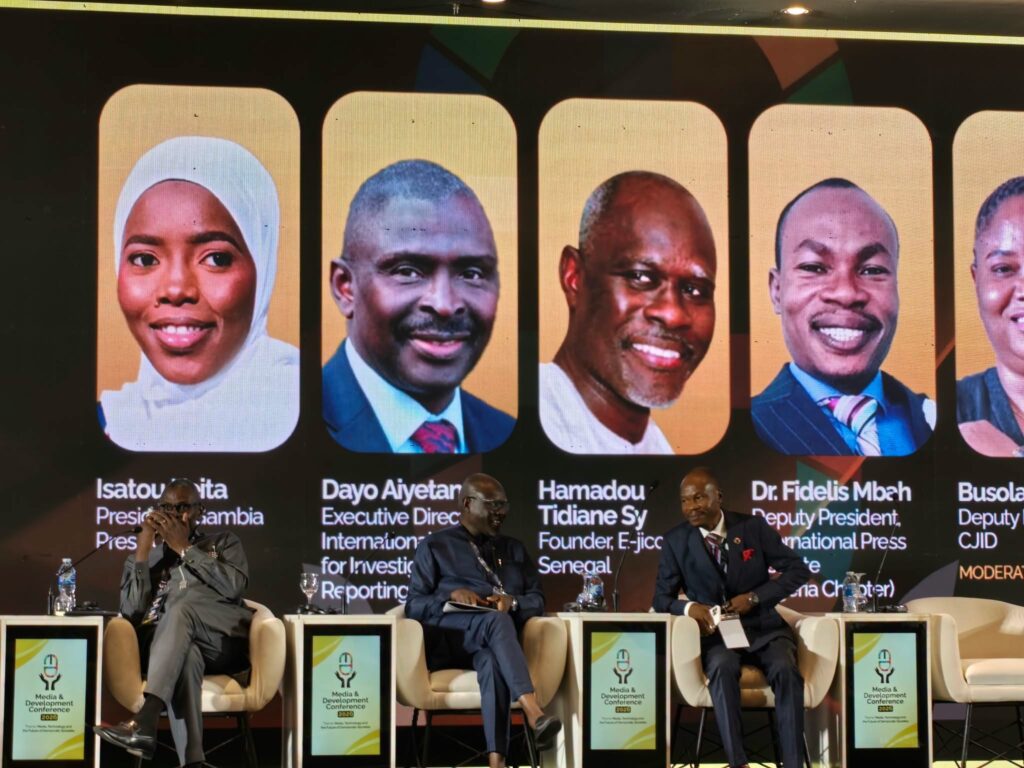
That was the big question that ran through Day One of the 2026 Media and Development Conference organised by the Centre for Journalism Innovation and Development (CJID) in Abuja on Monday, November 23, 2026
The conversations across the opening ceremony and plenary sessions were a reminder that journalism is facing challenges that go beyond the newsroom.
At the opening ceremony, speakers underscored the importance of journalism as a democratic infrastructure while the plenary sessions brought the challenges into sharper focus.
Plenary I focused on “Who still informs the Sahel? Journalism, safety and propaganda under military rule”. Journalists from the Sahel spoke about the realities of reporting under military-led governments, including intimidation, displacement, exile, loss of sources and the difficulties of sustaining investigative reporting away from home.
Founder of Foundation of Investigative Journalism (FIJ)Fisayo Soyombo also drew attention to the personal and psychological costs of investigative journalism and the fear that can discourage young reporters from pursuing rigorous journalism.
Another plenary that really addressed the issues was the Plenary III which focused on “Silenced by law? Cybercrime charges, defamation suits and the legal pressure on West Africa’s journalists.” Speaking during the plenary, Executive Director, International Centre for Investigative Reporting, Mr Dayo Aiyetan warned that frivolous lawsuits and prolonged legal battles were exhausting journalists and media organisations financially and psychologically, with some newsrooms resorting to self-censorship.
The discussion also highlighted the need for independent media regulation, stronger professional ethics and safer working environments for women journalists.
Beyond these sessions, some important messages emerged:
- Technology must serve journalism, not the other way around.
- Africa must move beyond being a source of data and content to actively shaping the global technology agenda.
- Journalists need strong professional networks, institutional support and sustainable media organisations.
- Press freedom requires constant protection, both online and offline.
- Young journalists must be prepared not only for the technical demands of the profession but also for its ethical, economic and safety challenges.
For myself and Media Mentors Network, these conversations reinforce an important responsibility: preparing journalists to survive, adapt, innovate and remain committed to public-interest journalism in a rapidly changing world.
The future of journalism will require more than talented reporters. It will require resilient journalists, responsible technology, supportive institutions and a society that values access to credible information.
A question for journalists, media students and media managers: What is the biggest threat to journalism in West Africa today: technology, insecurity, legal intimidation or the weak sustainability of media organisations?