
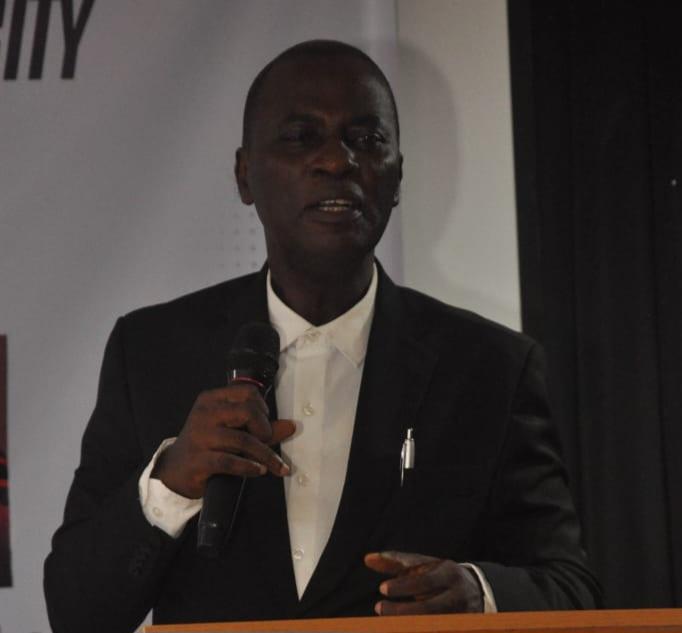
Town and Gown Lecture series by Executive Director, Media Career Development Network, Lekan Otufodunrin at Anchor University, Lagos.
In 1984, while on holiday as a Mass Communication student at the University of Lagos, I sought and got an internship placement at the defunct National Concord Newspapers.
The first day I resumed my internship at the newspaper office in Ikeja was dramatic in a way and underscores the need for student journalists to be trained to be industry-ready, which is the essence of what we are doing here today.
I walked into the newsroom just when the News Editor was looking for a reporter to send to cover an earth tremor in Ijebu Ode,Ogun State.
It was far back in the days when there were no mobile phones. He couldn’t reach any reporter to assign to cover what we now call the breaking story. I was being briefed how to travel to Ijebu-Ode with a driver to cover the major event when a senior reporter, Mr Dele Olojede walked in and I had to tag along with him to witness what it really takes to be a reporter beyond the theories I have learnt in the classroom.
The newsroom at National Concord, The Punch where I later worked from 1987-1999 and others back then were typically an open one with reporters who didn’t have access to individual computers and telephones.
Computer rooms were no-go areas for most members of staff. There were typists to type stories writing on off cuts by reporters. Reporters have to go through newspaper cuttings in files in the libraries to get background information for their reports.
Recorded interviews had to be manually transcribed however long the session is.
Reporters outside the headquarters of their organisations had to send their stories through dictating them on telephones to reporters who write them before giving it to editors who pass it on for editing and typing.
Back then, we had sub/copy desk staff who edit and rewrite stories.
Essentially, newsroom operations were manually done.
However, over the years, with the computerisation of newsroom operations and access to mobile phones and other new media tools and platforms, newsrooms now function largely digitally with the internet and other gadgets making it possible to perform many editorial functions seamlessly.
Sourcing, writing, editing, producing content for various platforms, sharing and other editorial roles are now easier to do with mastery of new media tools by those who know how to use them efficiently.
Enter AI
Like the internet happened on us in the media and disrupted traditional media practice for good, Artificial Intelligence is here to further change the way we practice journalism and other communication functions like in other sectors of human endeavours.
As we all know, AI refers to automation of tasks hitherto done by humans without machine assistance. Now, many things we used to do manually and even with the assistance of the internet and other digital tools can now be done relying on intelligent machines.
As much as we want to hold on to our traditional approach to managing newsrooms and going about our various editorial assignments, we are now faced with the reality of using AI as ethically as we can.
Before we get left behind as in the early days of the internet, we have to step up Reimagining media practice in the age of AI.
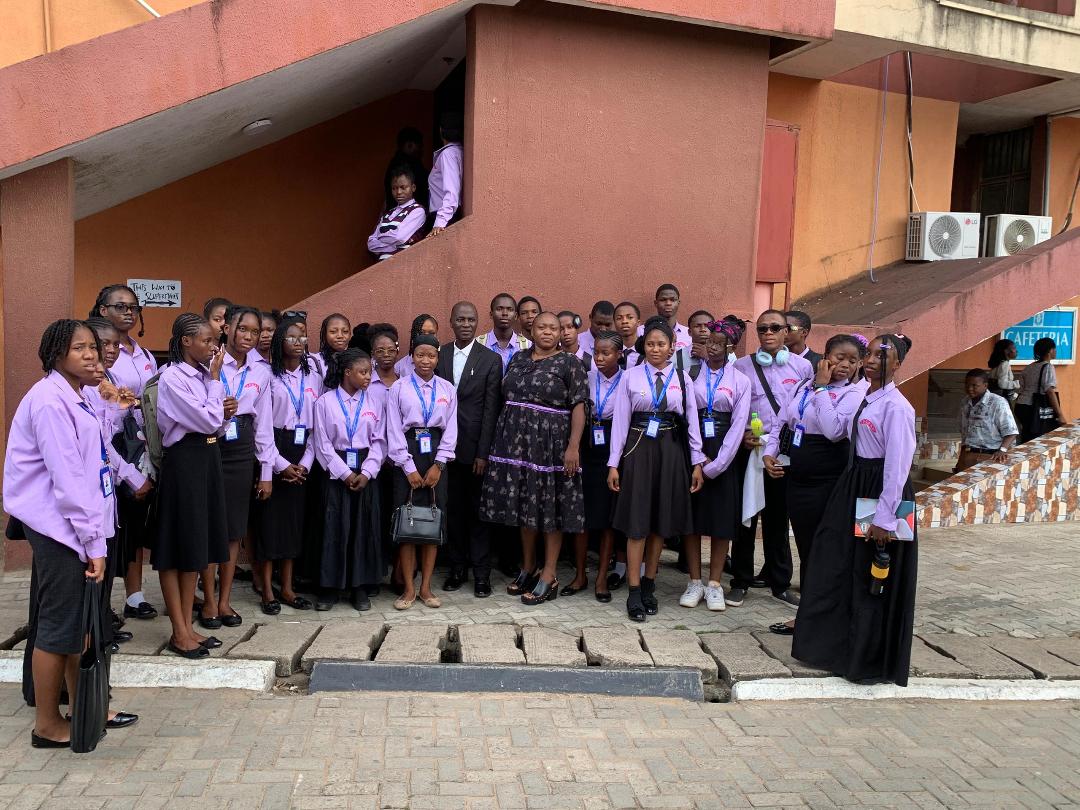
State of AI Adoption, Utilisation and Possibilities
Many media practitioners and organisations in the country are already utilising AI and getting better doing so, while some are still hesitant, either due to lack of knowledge or uncertainty on what the best approach should be. Yesterday, I was at programme for media executives and other journalists where the head of a major broadcast station said he largely saw AI from a negative perspective but is now convinced there are many things he can use it for along with his staff.
If Nigerian journalists are to remain relevant and competitive locally and globally, we have no choice but to upskill and use various AI tools to become more efficient for various editorial tasks.
I’m aware that at individual levels, many Nigerian journalists are learning and adopting AI for their work, but there is need for official back-up at the management levels to ensure that best practices are adopted and prevent abuse as we have witnessed in some recent cases.
Essentially, AI tools have to be seen as newsroom assistant not replacement. There is therefore no need for anyone to fear, though there is the reality that those who don’t know how to use the tools don’t have a future in the profession.
To reinvent our journalism practice, we can leverage AI for research, brainstorming, ideation, transcription, translation, data analysis, newsroom automation and various other use.
While human judgment, context, ethics, and storytelling are still largely a function of who is writing or producing what content, there is the opportunity for speed and accuracy in production with the use of some AI tools.
Tools that provide for automated transcription, summarization, and fact-checking can reduce production time. AI can also help newsrooms break stories faster and improve accuracy in reporting, reducing errors caused by the pressure of deadlines.
Other re-invention journalism possibilities include the following:
*Data Journalism: Turning Numbers into Narratives
AI can empower Nigerian journalists to work with large datasets—elections, budgets, health stats, crime data and others. This creates deeper, evidence-based reporting and strengthens accountability journalism, particularly in a country like ours where access to public data is often challenging.
*Audience-Driven News: Personalisation and Engagement
AI can track audience behaviour to recommend story formats, angles, or platforms.
Enables newsrooms to create tailored content for Nigerians on WhatsApp, social media, radio, television and podcasts. This helps bridges the gap between content and consumer preference.
*Enhancing Safety: AI Tools for Journalist Protection
AI-powered tools can detect online harassment, misinformation attacks, or coordinated trolling.
Journalists reporting from risky areas can benefit from real-time language translation and security alerts.
*Combating Misinformation
Nigeria faces a huge misinformation challenge during elections, health crises, and conflict.
AI-driven tools help verify images, videos, locations, and claims faster.
I’m glad to note that apart from AI tools from major global organisations, we already have local tools that can perform the above roles developed by Nigerian journalists and organisations.
Some of them include NewsAssist by Elfredah Kelvin-Alerechi, NubiaAI by Dataphyte, NativeAI by the International Centre for Investigative Reporting, Chatjourno by Ayomikunle Daramola, and Chronycles StorySpark by Kunle Adebajo.
Some of the tools that incorporate Language models capture Nigerian languages, accents, street terminologies, and socio-cultural nuances.
While advocating form use of AI, journalists have to guide against ethical pitfalls considering that the tools are capable of reinforcing stereotypes and distort narratives when they hallucinate and make up what does not exist.
In accordance with the code of ethics for practice of journalism, there is still the need to uphold transparency, accuracy, fairness, and independence when using AI tool. AI Ethical guidelines are being developed worldwide and we need to abide by them. Media organisations need to have their AI policies to guide their staff.
With re-training of journalists on digital skills, roles that are likely to be eliminated can be replaced with new ones like the following: AI Editors, Data Storytellers, Audience Intelligence Analysts, Automation Managers, AI Fact-check Specialists and others.
Media organizations will also need to hire tech staff who can develop their own unique tools and collaborate with universities, startups, and media NGOs to build Nigerian-relevant AI tools.
Undoubtedly, the present and future newsrooms would be Hybrid, Automated, Collaborative and only journalists and organisations able to adapt will survive the continuing digital disruption.
Newsrooms will become hybrid spaces where journalists, coders, AI systems, and product teams work together.
There would be need for more investment and continuing re-training for journalists and other media workers to catch up with the constantly changing media eco-system to achieve the desired re-invention of journalism practice.
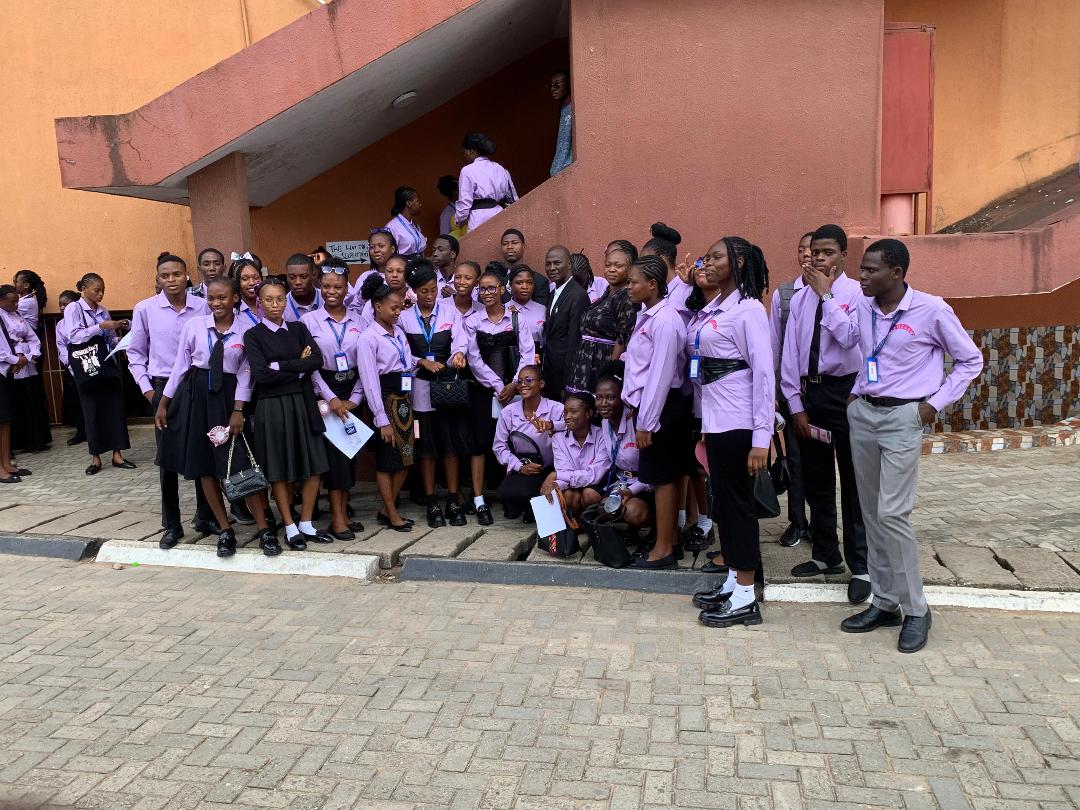
Your Role as students and soon to be media professionals
While you all are still students for now, you need to begin to fully understand how to use various AI tools for different journalism and communication roles ethically.
I’m stressing ethically because I know most of you are already familiar with using some tools, being digital natives, but you must not surrender your human intelligence to machines however intelligent they are.
You must still retain your ability to think deeply and produce content that are uniquely yours and not sound like machines.
If machines can easily perform the tasks you need to be employed for or hired in any capacity without your input, what is the use of the years you have spent in school.
As new entrants into the industry, you should be able to come up with AI tools to enhance media practice like some journalists and media professionals are already doing.
You should take time to study what presently obtains and how they can be better done using AI. You all have no choice than to be as digitally-savvy as you can be if you want considered for any role in journalism or the media industry generally.
Beyond the use of AI, I want to urge you to give your studies all the attention it deserves with minimal distractions in the age you live. Education is not a scam as some in your generation claim. It doesn’t matter if you are not interested in becoming a media professional.
As long as you are here, studying Mass Communication, be here fully and be interested in learning all you need to learn in your department and other optional course. Education makes you a better person in whatever you do.
Before you start thinking journalism or any other part of mass communication is not for you know enough of what the industry offers as we have too many non-mass communication graduates exceling and maximizing various opportunities.
It’s being forty years since I graduated from the University of Lagos and I have no regrets studying Mass Communication. I thank God for the grace He has given me through the years in journalism which I regard as a calling.
My prayer for you all is that He will open your eyes of understanding to know why you are studying this course and grant you the grace to eventually fulfil His purpose for your life and professional endeavours.
God bless you all. See you at the very top and I will be glad to your cheer leader.