
Today, a typical young Nigerian creative’s social media bio or resume is bursting with slashes and commas. There you’ll see: writer, designer, chef, MC, and more. You’ll find design portfolio links, voiceover reels, and videos showing the same person baking a cake. And then you wonder: na only you waka come?
You can’t blame them. They simply can’t help it.
Back in the 80s and early 2000s, being a teacher or a banker sorted the bills. You could rely on one source of income, and it was enough to take care of yourself, your family, and your obligations. Today, having a primary job alongside side hustles barely covers personal needs, let alone external commitments.
Because of this, the average young creative is left with little choice but to add graphic designer, MC, chef, and entrepreneur to their bio.
The truth is, in Nigeria’s current economic climate, a slash career is rarely a lifestyle flex; it is a common-sense survival tactic. You edit videos because you love it, write because you need to buy data and transport fare, and bake on weekends because depending on a single income stream is like cooking beans with a candle—it will never be enough.
There are perks to wearing different hats. First, having side hustles you control feels empowering. There is a sharp sense of proactivity—being active brings genuine satisfaction. The stimulation that comes from varied work can also be energizing. And honestly, more hats mean more money, which brings its own peace of mind.
However, wearing every hat demands versatility, resilience, and steady grace under pressure. You have to juggle them all, because that is the price of living the life you want. Yet few talk about how draining it gets when the load begins to choke you.
Burnout doesn’t happen overnight. It builds through a combination of a hundred smaller compromises.
Consider the mental crash that hits when you sew clothes from 3:00 AM to 7:00 AM, switch to Figma from 8:00 AM until 2:30 PM, and spend the afternoon recording a voiceover. Consider the fragmented time, the loss of focus, and the missed growth opportunities in any single sector. The more directions you pull yourself toward, the harder it becomes to return to what matters most.
There is nothing wrong with a lecturer baking cakes on weekends for events to supplement their income. But success isn’t just about doing everything; what matters most is how exceptional you are at what you deliver. And wearing every hat rarely leaves room to build exceptional mastery.
All-rounders still need solid footing. Versatility helps pay the bills, but even a generalist needs a foundation—a primary vocation, a starting base.
If you choose not to limit your capabilities, that is fine. But wearing multiple hats does not mean they must pull you in completely opposite directions. You can choose pursuits that share common ground so the context-switching is less exhausting. A seamstress can specialize in menswear; a chef can master traditional soups. In the market, generalists are consistently paid less than the specialists who command top rates.
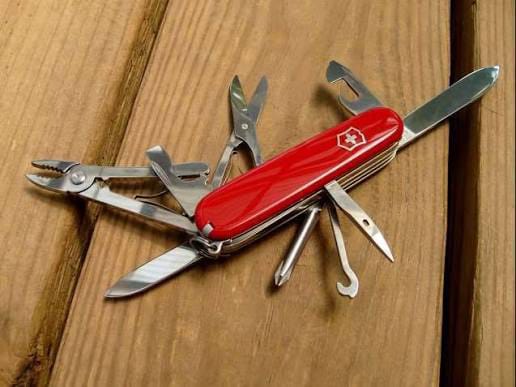
A Swiss Army knife can handle a bit of everything—a bottle opener, a screwdriver, a blade, and scissors, all folded into one neat frame. It is an ingenious tool. Yet if you need to cut timber, you do not reach for a pocketknife. If you need to mount heavy wall fixtures, you reach for a dedicated screwdriver, not a multi-tool attachment. A Swiss Army knife can do many things, but it is rarely the best fit for any specialized task.
The smarter approach is to establish a lead anchor career; one core discipline that takes center stage while complementary skills support it from the background. Grounding yourself in a primary craft works far better than splitting focus across divergent paths. Managing multiple jobs will always bring trade-offs.
Still, the friction softens when your main hustle and side projects complement one another, rather than forcing you to be a cab driver by day and an interface designer by night.
The ultimate goal is to build a life that works sustainably. It is easier to alternate between closely related caps—a bucket hat, a snapback, a baseball cap—than to rapidly switch between a fedora, a baseball cap, and a fez all in one afternoon. Wear your hats, but choose styles that connect and work together.
In the end, work hard. But remember to work smart, too.