
Ofili Chukwunonso writes on the challenge of knowing who to trust when seeing is no longer believing in the era of AI and deepfakes.
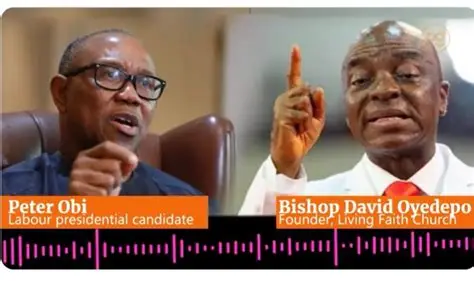
In 2022, a video surfaced showing President Volodymyr Zelenskyy telling Ukrainian troops to surrender during Russia’s invasion. It was fake. In early April 2023, a leaked audio controversy emerged involving Peter Obi and Bishop David Oyedepo, centering on talk of a religious war and the mobilization of Christian voters. Peter Obi’s campaign team dismissed the audio as a deepfake and a smear campaign, insisting the recording had been manipulated and taken out of context.
Artificial intelligence. Deepfakes. The threat is real.
According to ScoreDirect, deepfakes are synthetic videos, audio, or images generated using deep learning tools like Generative Adversarial Networks (GANs) to swap faces or mimic voices. In most cases, these technologies are used for negative purposes, such as pushing a false narrative or propaganda. A leaked audio clip could spark a war; generated fake images could tarnish a reputation in a single tap.
Once upon a time, it was easy to trust one’s sight. If you saw a video or photo, you believed it for what it was. But today, artificial intelligence has changed that narrative. The pictures, videos, and audio we see and hear may be entirely fabricated.
Behind this threat to authenticity lies rapid technological progress. Modern text-to-speech (TTS) systems can clone a person’s voice in seconds, aiding and abetting voice synthesis. Today’s visual deepfakes are increasingly convincing through models that allow near-perfect expression transfer. The biggest terrors are integrated systems that combine text generation, voice synthesis, video rendering, and social-engineering scripts into a coherent deception scheme.
In past years, it took serious effort to create a fake image. Now, all it takes is a detailed prompt, and artificial intelligence will produce media so real that misdirection is assured for anyone who doesn’t look closely. What modern technology can creatively express is extraordinary, but there is clear harm in what it brings. It can create magic or mayhem—and too often, it is the latter.
What is most upsetting is the unconscious effect this has on us as deepfakes become ordinary. It tampers heavily with our perception and our trust in anything on the internet. Soon, you and I won’t be able to trust evidence for what it seems. And when we don’t know what is real and what is not, truth becomes intangible.
Artificial intelligence, which is used to make deepfakes, can also be used to detect them. Creating a deepfake involves data manipulation that may not be evident to human senses but can be identified by advanced algorithms. Still, no matter how great a deepfake detector is, fakes will still slip through.
And that is where we step in with practical measures to mitigate the deception. For anything you encounter, verify before sharing. Rushing to public conclusions does more harm than good; it is best avoided. There will always be signs of AI fabrication—from distorted text to glitches in speech or repeating patterns. Social media platforms must also do their part to detect manipulated content and clearly flag what is true or false.
While we can never fully eradicate deception, our goal should be to limit how much damage it can cause. It will take all hands on deck—from technologists and creators curating what they build, to institutions verifying what is published, to the everyday person questioning media carefully without swinging between blind trust and total paranoia.
The truth is, no single solution will answer who we should trust when seeing is no longer believing. But a blend of deliberate, effective responses will restore some measure of trust in what we see. With AI and deepfakes, the foundations of credibility may be shaken.
But with our conscious effort, they will not crumble.
READ ALSO Why journalists should not take AI at face value