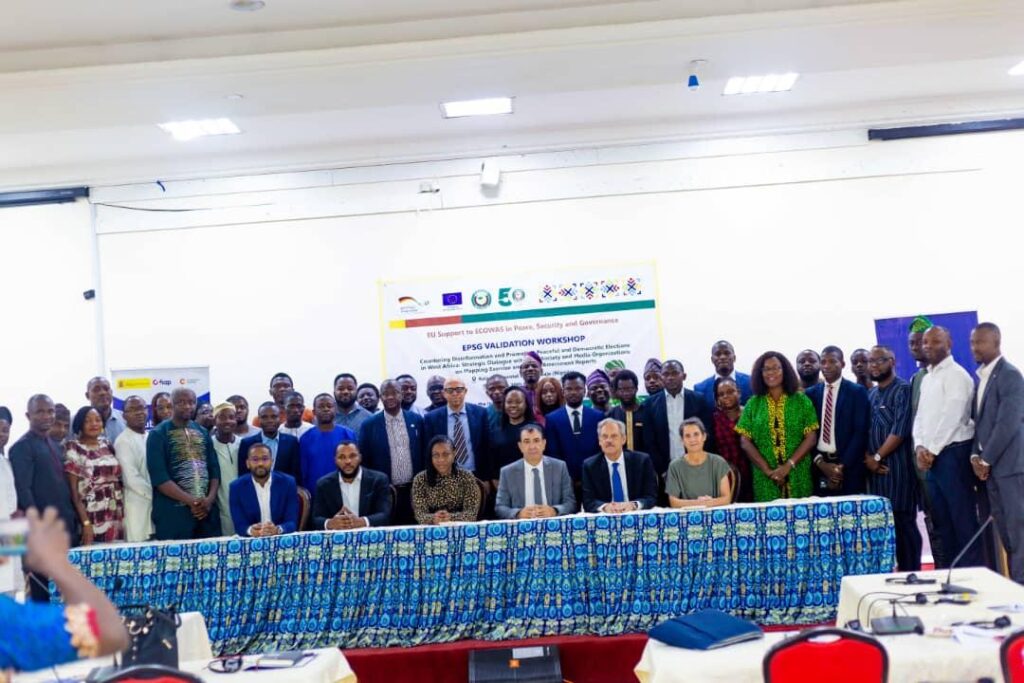
The Foundation for the Internationalization of Public Administration (FIAP) has concluded a two-day Electoral Security and Peace Governance (ESPG) Validation Exercise in Abuja as part of ongoing efforts to strengthen electoral governance, promote peace, and counter disinformation across West Africa.
Held on 18 and 19 November 2025 at Reiz Continental Hotel, Abuja, the workshop brought together civil society organisations, media actors, election stakeholders, and development partners from Nigeria, Benin Republic and The Gambia- countries who are approaching their election years.
The programme titled Countering Disinformation and Promoting Peaceful and Democratic Elections in West Africa: Strategic Dialogue with Civil Society and Media was funded by European Union and BMZ Germany.
The workshop served as a collaborative platform to review FIAP’s assessment and mapping documents focusing on key electoral governance challenges, particularly the escalating influence of disinformation and the risks of electoral violence across the subregion.
In her welcome remarks, FIAP Project Coordinator, Maria Belen Alvaro Sanchez, emphasised the workshop’s significance as the beginning of a sustained collaborative effort between institutions and citizens.
She explained that the reports being reviewed were shaped by voluntary responses from participating organisations after FIAP circulated initial questions via mobile phones. The responses—drawn from diverse organisations regardless of size formed the basis of the mapping and assessment documents.
Reaffirming FIAP’s commitment to inclusivity, she said “The idea of the workshop is to involve as many organisations as possible. We have not considered size or capacity. We want all the voices, smaller and bigger to be represented.”
She also said that FIAP would treat contributions from all countries with equal weight.
“Even if the number of representatives differs, the ideas, context and input you bring will be taken equally. We want to learn from you, from your experience and your work.”
She also acknowledged the growing complexities of elections in the region, noting that “Elections are always a difficult process. We know that disinformation has now been amplified by social media. We know about electoral violence.”
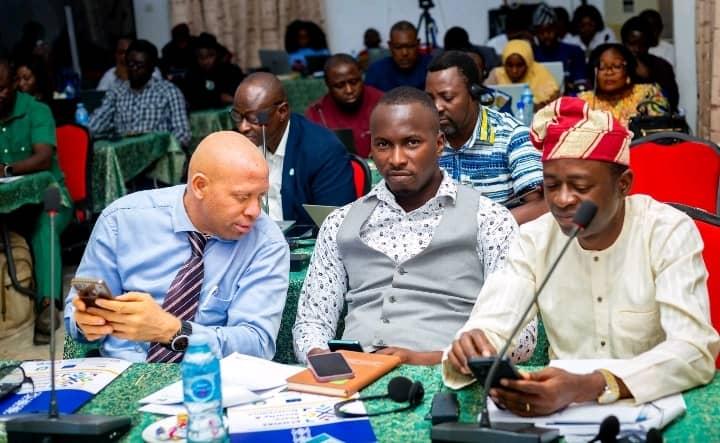
Representing the European Union Delegation to Nigeria, Mr. Moustapha Daukoure commended FIAP for producing high-quality analytical work.
Daukoure highlighted the broader European framework guiding the programme.
According to him, “The core objective is to help partners prevent conflict, respond to evolving security challenges and strengthen democratic governance in West Africa.”
He stressed that the validation workshop was essential to promoting transparency and building a shared understanding of electoral challenges.
Daukoure also outlined a key expected output.
“A flagship output of this programme will be a digital platform to support a long-term, region-wide community of practice,” he said.
Encouraging participants to contribute openly, he continued that, “The EU is proud to support this process… to strengthen democratic resilience, counter disinformation, promote peaceful and credible elections, and support a prosperous Africa.”
Speaking on behalf of the ECOWAS Commissioner for Political Affairs, Peace and Security (CPAPS), Mr. Francis Acquah-Akins Jnr reaffirmed ECOWAS’s focus on strengthening electoral integrity under the EU-supported EPSG framework.
“Allow me first to recall the broader framework which is the EU support to ECOWAS peace, security and governance, a flagship regional initiative. Its core objective is to help prevent conflict, respond to evolving security challenges and strengthen democratic governance in West Africa,” he said.
Acquah-Akins highlighted the workshop’s value, saying that, “This is exactly why we’re here today, to discuss some of those findings, not to receive a report written behind closed doors but done together with all the views and contributions of the different partners in the room.”
Dr. Marku Wagner, representing Team Germany, drew attention to global and regional democratic vulnerabilities.
He praised FIAP’s analytical contributions as “strategic,” saying they support election integrity in Nigeria, Benin and The Gambia.
Wagner warned against distorted public opinion, saying “Fabricated narratives distort public opinion, they deepen polarisation, and in the worst case, they contribute to violence.”
Highlighting the region’s information ecosystem, he said, misinformation now threatens democratic institutions and peace.
He also underlined the strategic importance of the EPSG programme, calling it: “a strategic investment in regional stability at a time when the stakes could not be higher.”
The Country Director of AECID, Mr. Santiago Ormeño García, expressed gratitude for the diverse presence of civil society and media actors.
He explained Spain’s policy framework for cooperation in West Africa and reaffirmed regional collaboration as a priority.
Participants however engaged in intensive breakout sessions covering:
Electoral Integrity and Participation,
Policy Advocacy,
Peacebuilding, Conflict Prevention and
Information integrity.
A technical presentation by Oluseyi Olufemi of Dataphyte Foundation guided participants through the assessment methodology.
On the second day of the event, Kehinde Ogunyale conducted a demonstration of the digital platform; electpeace.org, designed to support electoral stakeholders across West Africa.
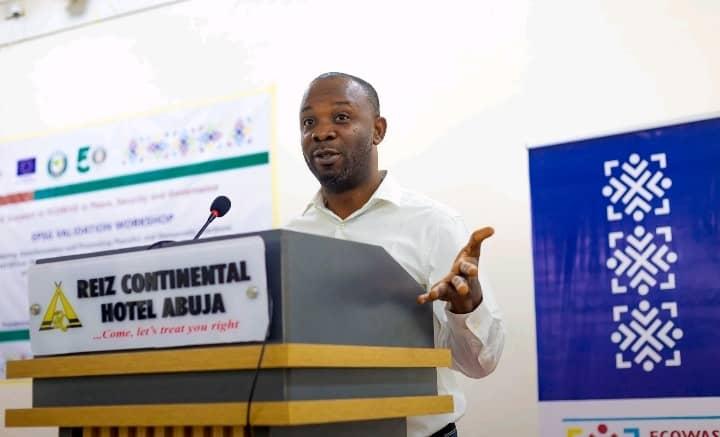
Participants reviewed the platform, offered suggestions for improvement, and discussed how it could enhance collaboration ahead of key electoral events.
The workshop is expected to produce a consolidated validation report that will guide interventions under the EPSG programme and strengthen partnerships among ECOWAS, civil society, development partners and the media.