
‘Media careers in 2026 and beyond will belong to those who can adapt their skills without losing their values, who can carry journalistic thinking into spaces where clarity, trust, and meaning are needed most’
For many journalists, the newsroom is not just a workplace. It is an identity because it shapes how you think, how you see the world, and how you measure your worth. So when conversations about life beyond the newsroom come up, they often trigger fear, guilt, or quiet shame. As if leaving or even considering other options means you have failed journalism.
I know this feeling intimately.
I remember sitting in the newsroom late one evening, the adrenaline of a breaking story already gone. The screens were still glowing, but the room felt strangely empty. I had done good work that day, important work, but I also knew that nothing about that effort translated into growth, security, or clarity about the future. That was the first time I admitted to myself that passion alone could no longer carry the weight.
I spent over a decade in journalism. I chased stories, edited under pressure, made judgment calls that mattered, and learned how to tell stories with integrity. Journalism sharpened my instincts and gave me a deep respect for truth. But at some point, I realised that the newsroom had taught me how to create value, but not how to fully own it.
That realization didn’t come from failure. It came from exhaustion, curiosity, and the growing awareness that the skills I used every day like clarity, context, storytelling, audience intelligence, were being desperately needed outside the newsroom, often by people who didn’t understand them nearly as well.
Here is the first truth journalists need to hear, media skills are not newsroom skills. They are life and business skills that the newsroom happens to refine.
Across industries, organisations are struggling with communication. They are visible but not understood. Loud but not trusted. Present but not believed. Journalists understand trust. We understand framing. We understand how narratives shape perception and behaviour. That knowledge is rare and it is valuable.
When I transitioned into media and communication strategy, I didn’t abandon journalism. I translated it. I moved from reporting stories to helping organisations tell theirs responsibly. From reacting to events to designing narratives. From chasing deadlines to building systems that endure. The same discipline applied just in a different direction.
Today, media professionals are finding space in strategic communications, corporate and brand storytelling, media training, development communication, advocacy, and consulting. Some build independent practices. Others advise leaders, founders, and institutions during moments that demand clarity and credibility. These paths are not lesser alternatives. They are legitimate extensions of journalistic skill
What makes this transition hard is not competence. It is mindset. Journalists are trained to stay behind the story, not stand in front of it. We are taught to observe, not to position ourselves as experts. So when it becomes necessary to articulate our value, many struggle. The result is underpricing, overworking, or remaining loyal to systems that no longer sustain us.
Another truth we rarely say aloud is that many journalists are not burnt out because they hate the work. They are burnt out because the work keeps demanding sacrifice without offering growth.
The shift forward requires learning a new language. The language of outcomes, not outputs. Outside the newsroom, people are less interested in how well you write and more interested in what your communication achieves. Does it build trust? Protect reputation? Change behaviour? Create alignment? Once journalists understand this, their confidence changes.
Waiting for permission keeps too many media professionals stuck. The industry has evolved faster than its structures. Opportunities are no longer handed down through titles alone. They are claimed by those who can define their relevance clearly.
If you are a journalist reading this and feeling restless, tired, or quietly unsure, know that you are not broken, and you are not behind. Your skills are still valid. Your experience still matters. You may simply need to give yourself permission to reimagine where and how your voice is used.
The newsroom is one path not the destination. Media careers in 2026 and beyond will belong to those who can adapt their skills without losing their values, who can carry journalistic thinking into spaces where clarity, trust, and meaning are needed most. And if you find yourself standing at that crossroads, uncertain but hopeful, that is not failure. That is growth knocking.
READ MORE 2026 Media Career Outlook: Prospects in broadcast media, development communications
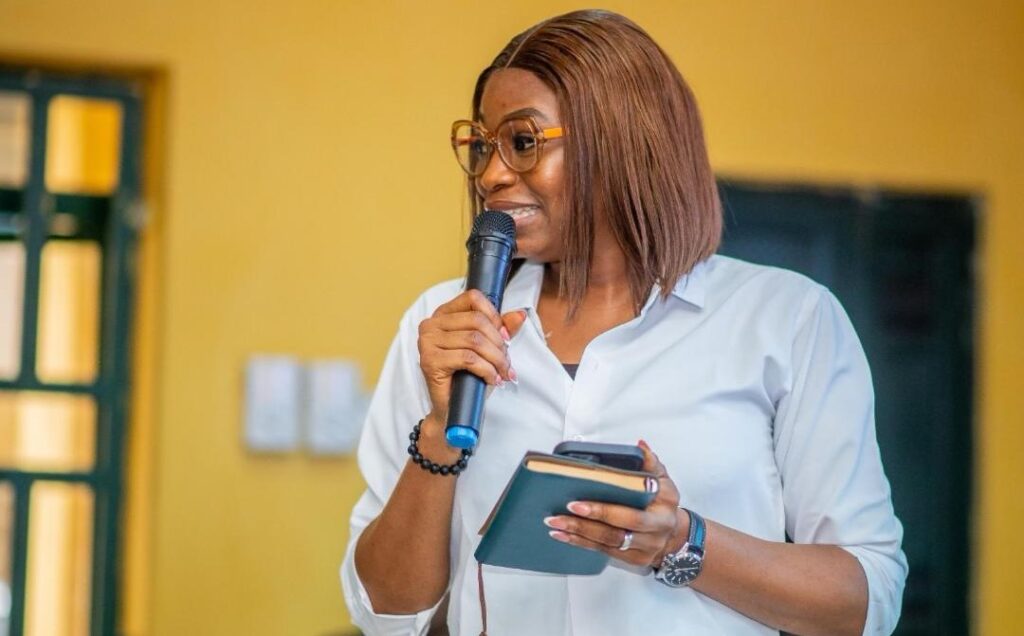
Chioma Ezenwafor is currently the Founder of Surthrive Media, a strategic communications and media consulting firm based in Port Harcourt. She is a Media and Communication Strategist with over a decade of experience advising media, business, and civic organisations across journalism, content strategy, and media leadership. A former News Manager at Nigeria Info, Cool and radio stations and award-winning journalist, she works at the intersection of media strategy, innovation, and audience trust.