
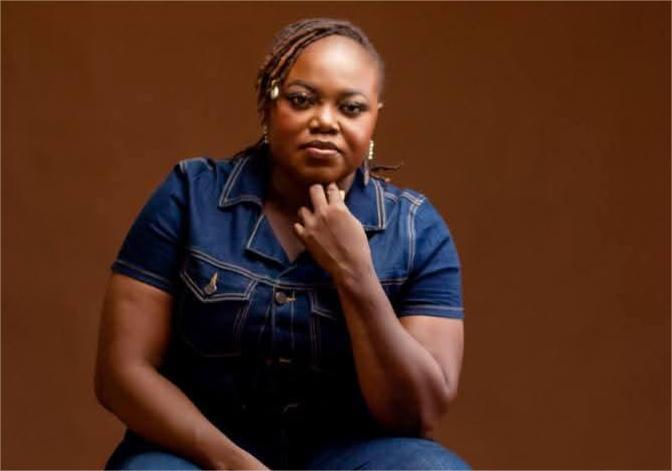
Niger State Correspondent of The Nation Newspaper, Justina Asishana writes on her digital exploration journey and urged journalists in 2026 to dive in by starting small by building an online presence and learn one tool at a time.
As I sit in my house in Minna, Niger state reflecting on the cusp of 2026, I can’t help but marvel at how far journalism has evolved since I first picked up a notebook and pen about a decade ago.
My name is Justina Asishana, and I’ve been the Niger State correspondent for The Nation Newspaper for several years now. But more than that, I’m a data and investigative journalist, a fact-checker, and a perpetual student of the digital world. One of my mentors calls me a “AI explorer.”
Winning awards like the Agriculture Reporter of the Year at the 2025 Nigeria Merit Award and the 2025 African Journalist for Human Rights has been gratifying, but it is the daily grind of harnessing online tools that truly defines my craft today.
In the new year, being a truly digital journalist is not just about adapting, it is about thriving in a landscape where information flows like a river, and we must navigate it with precision, ethics, and innovation.
My entry into digital journalism wasn’t planned; it was born out of necessity. Early in my career at New Nigerian, Daily NewsWatch and even The Nation, I covered stories from remote areas where traditional sources were scarce. Phone calls and in-person interviews were my staples, but they were time-consuming and often incomplete.
Then came the pandemic in 2020, which forced me online or made me discover the opportunities the online world has to offer. I discovered social media platforms like X (formerly Twitter), Facebook, and Instagram not just as echo chambers or platforms for fun, but as goldmines for leads and sources. For instance, during my investigative work on agricultural issues in Niger State, I monitored hashtags like #NigerFarmers and #NigeriaAgriculture which gave me insights to the story I was working on.
In 2026, a truly digital journalist must master social media as a two-way street. It’s not enough to broadcast; we need to engage. I use X and Facebook to crowdsource information and sifting through responses for verifiable tips.
In going digital, caution is key as misinformation spreads fast, so I do my best to cross-verify every user-generated tip with official sources or data sets. As a WHO-ICFJ Road Safety Reporting Fellow, I learned to use social listening tools to track public sentiment on issues like road accidents, turning raw online chatter into insightful reports. As a Fact-Checker, I have learnt to use digital tools to search for claims and verify faster.
Beyond social media, online research has changed how I gather facts. Gone are the days of dusty archives; now, I dive into digital databases. For data-driven stories, I use platforms like Nigeria’s National Bureau of Statistics website or global repositories like World Bank Open Data.
In one piece on healthcare disparities in rural Niger, I pulled datasets on hospital staffing and visualized them using free tools like Tableau, Flourish or Google Data Studio. These visualizations are not just pretty, they make complex information accessible, helping readers understand complex reports.
But 2026 demands more: embracing AI without losing our humanity. AI tools like ChatGPT, Gemini, Grok and others assist in brainstorming angles or summarizing lengthy reports, but I always fact-check outputs manually.
For transcription, Otter.ai and Transcribe have saved me hours on interviews, especially in noisy environments (I always tell people that I dreaded transcribing interviews but not anymore). In investigative work, tools like Bellingcat’s open-source intelligence (OSINT) techniques, analysing geolocated photos or videos from social media have been game-changers. Ethics are paramount; AI can bias results if not handled carefully, so I try to adhere to guidelines ensuring transparency in my methods.
Multimedia storytelling is another pillar of digital journalism because these days, readers crave more than text; they want immersion. I’ve incorporated short videos, and infographics into my work. Using free apps like Canva for graphics or Anchor for audio. For The Nation, I have produced video explainers on my reports and shared on social media. This not only boosts engagement but reaches audiences beyond print. In the New Year, I plan to experiment with interactive stories using tools like Flourish or Knight Lab’s StoryMap, where readers can explore data points themselves.
Of course, challenges abound. Digital divides persist in places like Nigeria, where internet access is spotty in rural areas. I have faced power outages mid-research, reminding me to back up work on cloud services like Google Drive. Cybersecurity is a constant threat. As an investigative journalist, misinformation wars rage online, so fact-checking tools are indispensable.
Looking ahead to 2026, being truly digital means continuous learning. I intend to deepen my skills in data journalism through online courses on platforms like Coursera or Google. I am also thinking that exploring Virtual Reality might be next especially around immersive stories on environmental, health and agricultural issues.
But at its core, digital journalism amplifies voices, holds power accountable, and fosters solutions. My experience has shown me that online tools are not replacements for shoe-leather reporting, rather, they are enhancers.
In this New Year, I urge fellow journalists: dive in. Start small by building an online presence and learn one tool at a time. Take time to master a tool enough that you can teach someone on it. The digital realm offers endless possibilities, from real-time collaboration on Google Docs to audience analytics via tools like Google Trends. But remember, technology serves the story, not vice versa.