
Former Nigerian Ambassador to the United Kingdom, Ambassador Sarafa Tunji Ishola has urged Nigerians to focus more on improving the lives of the people through education, poverty eradication, and better communication in local languages.
He made this call at the 7th Anniversary Lecture of Penpushing Media, held on Thursday at the Olusegun Obasanjo Presidential Library (OOPL) in Abeokuta, Ogun State.
“Until we get the led right through literacy and a poverty eradication strategy, and ensure that we localise discussions of this nature by translating them into Yoruba, Hausa, Igbo, and other local languages so that the people are carried along, we will keep talking among ourselves as elites, do the camera clicks, and it will end there,” he said.
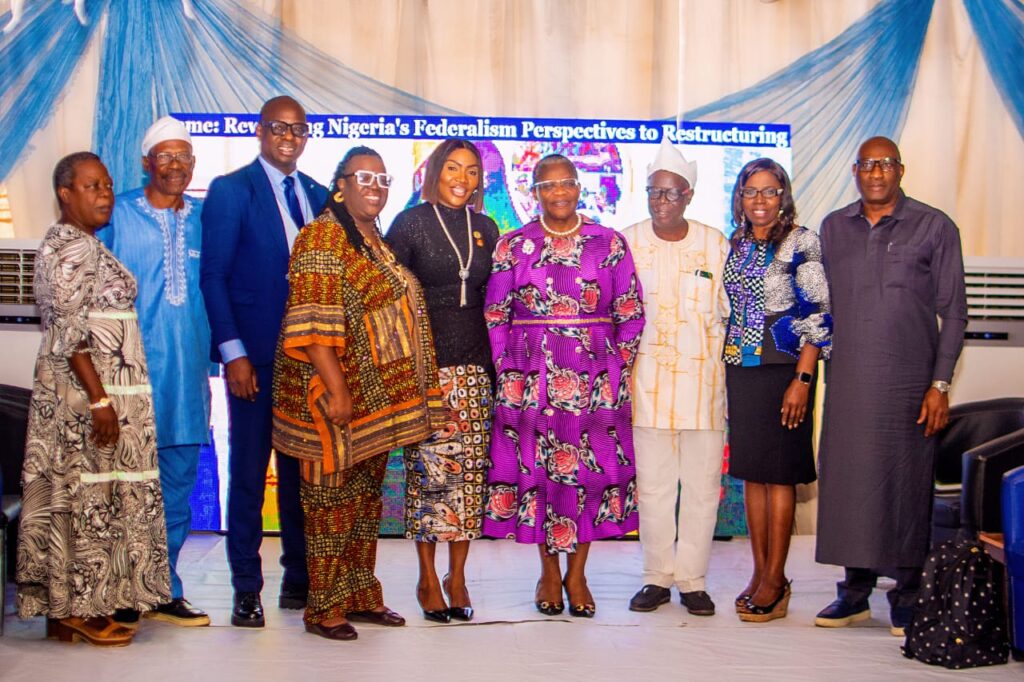
The anniversary lecture, themed “Reworking Nigeria’s Federalism: Perspectives on Restructuring and Fiscal Federalism,” attracted dignitaries from across sectors, including the judiciary, media, political, academic, and traditional institutions.
In his remarks as Chairman of the occasion, Ambassador Ishola stressed the urgent need for structural reforms that go beyond ethnic sentiments and political interests, framing restructuring as a national necessity rather than a sectional demand.
“Nigeria’s current federal structure, though adopted in principle, suffers in practice. It neither delivers the autonomy expected by federating units nor promotes the developmental competition required for national growth. True federalism is not merely about devolution of powers; it’s about responsible governance, institutional parity, fiscal equity, and citizen-driven accountability,” he noted.
Reflecting on the state of leadership in Nigeria, the former envoy criticised the lack of motivation for genuine public service among officeholders, linking it to a wider culture of gratification and poor historical memory.
“In this country, we gratify our leaders without holding them to account,” he said, listing several past Nigerian heads of state who faced violent deaths, exile, or harsh political treatment. “How do we motivate leaders to get into position? We should lay emphasis on what they’ve done right and what went wrong, so we can progress as a nation.”
He also praised Penpushing Media for being a voice of reason and truth in today’s media space, noting that democratic country is not built by elections alone, but by the power of ideas.
“Penpushing has been doing this for seven years, bringing truth and objectivity even in confusing times.”
He urged Nigerians, both at home and in the diaspora, to resist political apathy and contribute actively to nation-building.
“Let this anniversary rekindle in us the commitment to build a Nigeria where every region thrives, every citizen counts, and every structure works; not just in theory, but in truth,” he said.
The Penpushing Media 7th Anniversary Lecture further affirmed the role of the media in shaping public policy, fostering democratic values, and steering critical national conversations; especially at a time when governance and development remain pressing concerns for the Nigerian people.