
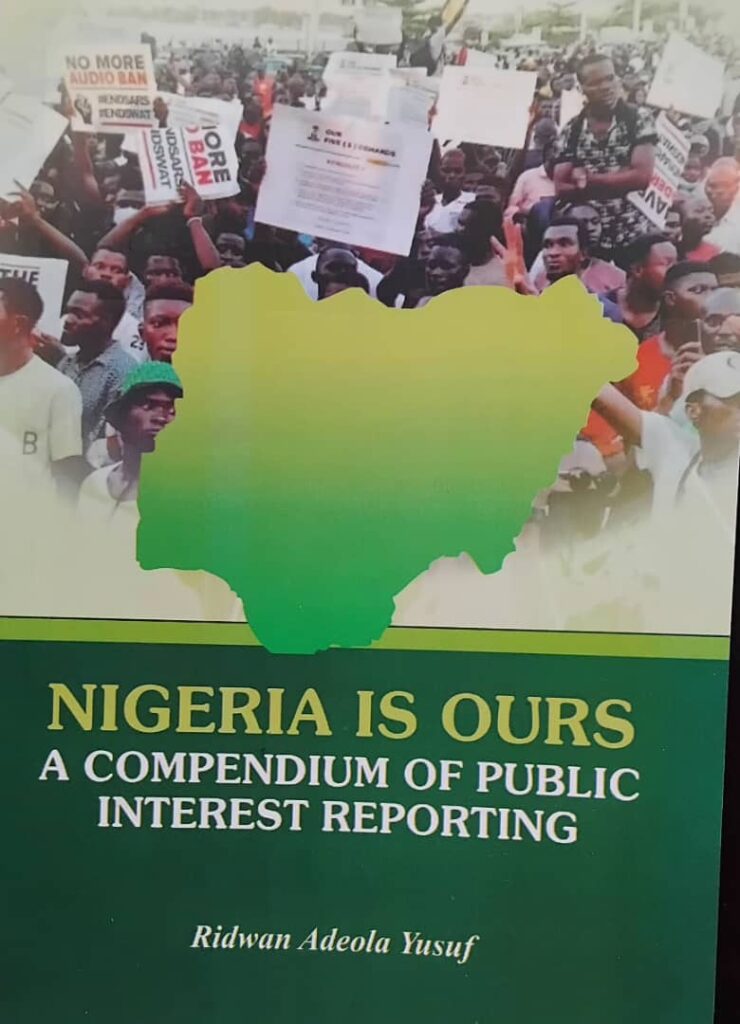
Foreword for Nigeria Is Ours: A compendium of public interest reporting by Ridwan Adeola Yusuf, Current Affairs/Political Editor at Legit.ng
In this age of information overload, with so much content, including investigative reports by journalists, available on various platforms, it is easy to miss reading detailed investigations on issues of public interest.
Even many of those who try to read such reports, covering a range of issues on education, crime, social justice, security and others, do not read beyond a few paragraphs before moving on to catch the ever-breaking news and less important issues.
Instead of allowing his diligently researched, evidence-based reports to be lost in the pile of many online publications, Ridwan Adeola Yusuf has come up with this revealing and insightful compendium of his investigative reports. It is worth reading to appreciate the complexity of some of the issues he has reported on over the years.
Among the reports in this book are Blood Transfusion Ban and Health Risks in Nigeria as it Affects Members of Jehovah’s Witnesses, The Dark Truths About Nigerian Adult Film Business, and an undercover investigation into the enablers of crime and corruption involving clerics.
Others are on drug abuse, cultism, teen pregnancy, tales of young suicide attempters, arrests and ill-treatment during the #ENDSARS protests, extortion of tricycle operators by the police, the shrinking civic and media space, and the persecution of loan defaulters by microlenders.
The high quality and in-depth nature of Yusuf’s reports are not surprising, considering his impressive profile as a former freelance fact-checking researcher, senior investigative reporter and editor at Politics Nigeria, and presently, Current Affairs/Political Editor at Legit.ng.
I did not hesitate to agree to write this foreword, having over the years seen some of Yusuf’s impressive journalism exploits online.
The 20 reports contained in this compendium are evidence of his commitment to engaging in the kind of rigorous journalism practice that not many journalists have the ability to undertake, and which can beam a helpful searchlight on issues of public interest.
The compendium is an invaluable resource for students, journalists, media trainers, researchers, policymakers and anyone interested in learning more about the issues Yusuf has reported on which I highly recommend.
I commend Yusuf for taking the initiative to preserve his excellent journalism reports in print format, making them more accessible to readers who need to engage with them. I also urge more journalists to do the same.
Nigeria is indeed ours, as the title of the book reflects, and we need to keep in view the public issues Yusuf has focused on in this compendium and work together to find solutions to the many unresolved issues in the country highlighted in the book.
Lekan Otufodunrin, Executive Director, Media Career Development Network