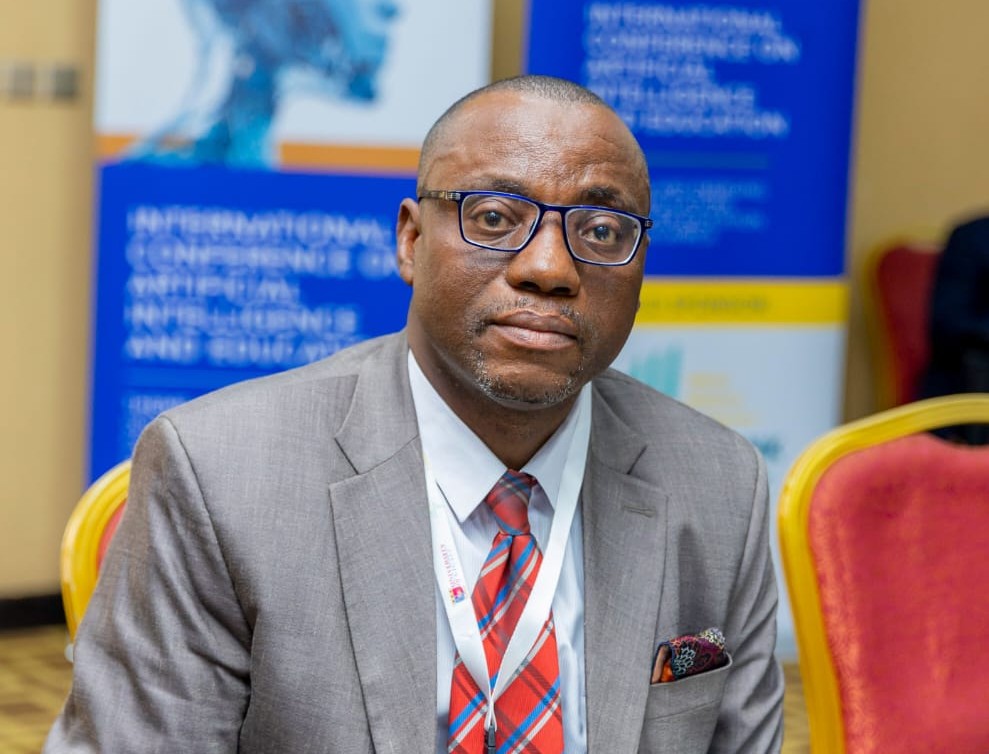
Speech to The Graduating Students of College of Management and Social Sciences, Covenant University, Ota, at Their Hooding Ceremony, on Thursday, October 29, 2026, By Joel Nwokeoma, Metro Editor, PUNCH Newspapers titled The Release of Eagles: From From academic preparation to purposeful impact.
It is also a rare privilege to stand before this convocation of eagles at this significant moment. It reminds me of a similar striking experience about 30 years ago when I was graduating from Abia State University as a young lad.
I know very well that today marks a significant milestone in your lives. It is a day of celebration, gratitude, reflection, and expectations for the future. It is also a day when years of lectures, assignments, examinations, sleepless nights, sacrifice, and determination converge in a celebratory moment of accomplishment.
To the parents and guardians, your love, prayers, and investments in these young men and women are worthy of celebration. Seeing how resplendent you look here, I remember how my parents looked at my graduation. Measured and charming. Smiling profusely. Arms waving excitedly.
To the lecturers and university management, your commitment to nurturing young minds and shaping character is noteworthy and deserves commendation.
And finally, to you, the graduating class of 2026, the raison d’être of our gathering here today, big congratulations!
But beyond the applause, photographs, graduation gowns, and celebrations, I invite you to consider a question that may be more important than the certificates you will receive today:
What will your impact on the world be because you passed through Covenant University?
That, distinguished ladies and gentlemen, is the central question of my address.
I will share some thoughts with you on the topic, “The Release of Eagles: From Academic Preparation to Purposeful Impact.”
I intend to challenge you to see this ceremony not merely as the end of an academic journey, but as the beginning of a greater calling.
My message is simple: You have been prepared to fly. Now, you must decide what your flight will accomplish.
- The eagle must eventually leave the nest
The eagle is an extraordinary symbol of vision, foresight, courage, royalty, strength, freedom, resilience and divine connection and purposeful flight.
But there is something important about the eagle that I want us to consider today: preparation is never intended to become a permanent substitute for deployment.
The nest provides shelter. It provides nourishment. It provides a measure of protection. It is where strength is built. The purpose of preparation is not to keep the eagle in the nest forever. It is to prepare the eagle to soar in the skies.
In much the same way, Covenant University has provided you with teaching and an environment in which your minds have been trained, your knowledge expanded, your character challenged and your potential well nurtured. I am sure none of you is leaving here today the same way you came in when you gained admission four years ago.
However, it is important to know that while helping to provide you with a solid foundation, the university cannot live your life for you.
Your lecturers cannot make every decision for you. Your parents cannot accompany you into every office, boardroom, newsroom, business negotiation, or leadership position. Also, your certificates cannot answer every question that life will ask you. When life asks, you have to answer.
At some point, the prepared must become the deployed.
That is what this graduation ceremony represents.
You are moving from a structured environment into a world that will not always provide clear instructions, predetermined answers, or easy opportunities.
You know what? You will encounter competition. You will encounter uncertainty. You will experience some disappointments. Some of your most carefully prepared plans may not work out as you imagined.
But you must not allow the uncertainty of the future to diminish the potential and possibilities within you. The same way I did not allow the disappointments in my early years in life to hold me eternally captive.
The release of eagles is not the declaration that the world will be easy. It is the affirmation that you are well-prepared and ready to face it.
- My journey: From the classroom to the newsroom and beyond
Permit me to draw a few lessons from my own journey.
I was born and raised in Assa, in Ohaji, Imo State. Like many young people who grow up with aspirations for a better future, I understood that education could open doors to opportunities and equip me to contribute meaningfully to society.
I studied for and graduated in Government and Public Administration at Abia State University. I later proceeded to the University of Lagos, where I earned a Master’s degree in Political Science, specialising in International Relations.
My academic journey gave me a foundation in governance, public affairs, political institutions, and the complexities of human society.
But my experience has taught me that education is not simply about acquiring knowledge. It is about learning how to apply knowledge to the problems confronting people and society.
My professional journey began to take shape through research and writing. I worked with Daily Times of Nigeria as a Research Officer on the Editorial Board and wrote weekly columns. I also served as a research assistant to Professor Cyril Obi, a renowned scholar whose work in international relations and African politics then at the Nigerian Institute of International Affairs, contributed to my appreciation of research, critical inquiry, and public affairs.
I subsequently worked with Verity Communications and served as Executive Director of Concerned Professionals, a Lagos-based not-for-profit advocacy organisation.
In 2009, I joined PUNCH Nigeria Limited as a Senior Research Officer on the Editorial Board.
Over the years, I have served in different editorial capacities, including Op-ed Editor, Contributing Member, Editorial Board, Online Editor and, currently, Metro Editor. In between, I have had the privilege of participating in high-level policy meetings in other African countries, as well as the United States.
Each stage presented different responsibilities. Each position demanded learning, adjustment, judgment, and a willingness to embrace new challenges.
I share these experiences not to present my journey as a perfect success story, but to make an important point: Your future may be connected to your education, but it will not always follow the exact route you have imagined.
The degree you are receiving today is important. The discipline you have acquired is important. The relationships you have built and will build are important.
But you must also develop the courage to explore opportunities beyond the boundaries of your original expectations.
Your first job may not be your dream job. Your first business may not be your most successful venture. Your first leadership opportunity may not come with an impressive title.
Do not despise humble beginnings.
Do not allow a temporary disappointment to become a permanent definition of your self-worth.
And do not assume that a different route necessarily means a failed journey.
Sometimes, the experiences that appear unrelated to our ultimate destination are precisely the experiences that prepare us for greater responsibilities.
- Do not merely pursue a career; discover a contribution
One of the greatest dangers facing young graduates is the temptation to measure success exclusively by employment, salary, professional title, social recognition, or material possessions.
These things may have their place. There is nothing wrong with seeking financial security, professional advancement, or a comfortable life.
But they are not sufficient measures of a meaningful life.
I want you to ask yourselves three questions:
What am I good at?
What problem can I help solve?
And whose life can become better because of what I know and what I do?
These questions move you from career ambition to purposeful impact.
My work in journalism has repeatedly brought me face to face with a sound knowledge of the relationship between knowledge and responsibility. Journalism is not simply about gathering information, writing stories, or attracting readership. At its best, it helps society understand itself, interrogate power, confront injustice, and make informed decisions.
That responsibility requires more than a command of language. It requires accuracy, fairness, courage, truthfulness, sound judgment, and an understanding of the human consequences of public decisions.
The same principle applies to every profession represented in this graduating class.
If you are a social scientist, look beyond the human laboratory to the challenges that your discoveries can help address.
If you are an entrepreneur, do not think only about profit; think about the jobs you can create, the needs you can meet and the quality and value you can deliver.
If you are entering technology, ask how your innovations can improve education, healthcare, agriculture, financial inclusion, and public services.
If you aspire to leadership, understand that leadership is not a privilege to be enjoyed but a responsibility to be discharged.
Do not spend your life asking only, “What can I get from this society?” Ask also, “What can this society gain because I am here?”
That is the difference between merely occupying space and making an impact.
- Excellence is not an event; it is a habit
At this point, I want to draw your attention to another lesson from my professional experience.
Over the years, I have moved through different areas of editorial work, from research and opinion writing to digital journalism and newsroom leadership. Each role has reinforced the importance of continuous learning and professional discipline.
The media environment has changed dramatically. Newsrooms that once relied primarily on traditional publishing processes now contend with digital platforms, rapidly evolving audience behaviour, artificial intelligence, and the growing challenge of misinformation.
In recent engagements on journalism, media innovation, and artificial intelligence, I have continued to see how important it is for professionals to adapt without abandoning the principles that give their work credibility.
Technology can make work faster. New tools can expand our capabilities. Innovation can open doors that did not previously exist, but there could be hidden trap doors.
But speed is not the same as accuracy. Visibility is not the same as value. And technological sophistication is not a substitute for sound judgment.
These lessons extend far beyond journalism.
You are graduating into a world in which AI is reshaping professions, industries, and the nature of work itself. Some of the skills you possess today will need to be updated tomorrow. Some jobs will change. New opportunities will emerge.
You must therefore resist the temptation to regard your graduation as the completion of your learning.
Your degree is evidence of what you have studied. Your willingness to keep learning will determine how well you respond to what challenge or opportunity comes next.
Read widely. Ask questions. Seek mentors. Study developments in your field. Learn from people whose experiences differ from yours. Be willing to admit when you do not know something.
And when new technology emerges, do not simply ask whether it can make your work easier. Ask whether you are using it wisely, ethically, and responsibly.
The world does not need graduates who merely possess information. It needs people who can interpret information, exercise judgment, solve problems and create value.
Excellence is not something you demonstrate only during examinations or at ceremonies like this one.
It is the discipline of doing the right things well, consistently, even when nobody is watching.
- Your character must be strong enough to carry your ambition
Distinguished guests, if there is one message I would want every graduate to remember long after this ceremony, it is this: your ambition must never outgrow your character.
You may become influential. You may become wealthy. You may occupy important positions in government, business, academia, technology, the media, or civil society.
But what will your achievements mean if people cannot respect and trust you?
What is the value of professional success obtained through dishonesty? What is the worth of influence used to intimidate the vulnerable? What is the purpose of wealth accumulated without any consideration for the people whose lives your decisions affect?
In a society that sometimes celebrates appearances more than substance, you must have the courage to be different.
Be honest when dishonesty appears convenient.
Be fair when prejudice offers an advantage.
Be accountable when others are looking for excuses.
Be humble when success attracts applause.
And be compassionate when you encounter people who cannot offer you anything in return.
A society does not become better simply because it produces more graduates. It becomes better when educated people use their knowledge, skills, and influence responsibly.
Covenant University has a distinctive Christian identity. That identity provides a useful foundation for reflecting on the relationship between faith, excellence, and responsibility.
Matthew 5:16 instructs believers to let their light shine before others so that their good works may be seen.
Notice that the emphasis is not simply on possessing light, but on allowing that light to be expressed through good works.
Your faith should influence how you conduct business, how you treat employees, how you manage public resources, how you respond to injustice and how you behave when confronted with difficult ethical choices.
Do not allow your Christian identity to become merely a label. Let it be reflected in your conduct, and the way you treat others.
Your greatest testimony may not be what you say about your faith, but what your life demonstrates about its influence.
- You are not too young to make a difference
One of the excuses young people sometimes make is that they think that they must wait until they become older, wealthier, more connected, or more powerful before they can contribute meaningfully to society.
I challenge you to reject that mindset.
Impact does not always begin with a large office, a prestigious title, substantial capital, or access to influential people.
Sometimes, impact begins with identifying a problem and taking the first responsible step towards solving it.
It begins with an idea developed into a useful product. It begins with a small business that creates employment for two people. It begins with a community initiative that helps children acquire essential skills. It begins with a research project that exposes a problem and points towards a solution.
It begins when someone decides that a problem should no longer be ignored.
My own involvement in different professional, civic and mentorship initiatives has taught me that contribution takes many forms. It may involve sharing knowledge, helping young professionals develop their skills, participating in advocacy or supporting efforts to improve institutions.
No single person can solve every problem. But each of us can take responsibility for something within our reach. When you solve the challenges around you and I do the same to mine, we will have a wholesome society. Instead of lamentations, ask difficult questions.
Why should preventable problems persist when knowledge and technology can help address them?
Why should talented young people be discouraged from building enterprises and creating employment?
Why should public institutions fail to deliver their intended benefits to citizens?
Why should innovation remain an aspiration when it can become a practical instrument for improving lives?
I do not suggest that these challenges have easy solutions. Many are rooted in complex economic, political, and institutional realities.
But I urge you not to confuse the complexity of a problem with the impossibility of contributing to its solution.
You may not transform an entire industry in your first year after graduation. You may not immediately establish a thriving enterprise. You may not begin your career in the position you desire.
Nevertheless, you can begin building competence. You can cultivate discipline. You can develop an idea. You can serve your community. You can become a person others can trust.
The future is often shaped by people who are willing to begin before they have all the resources they desire.
Do not wait until you are powerful before you become useful. Begin where you are, with what you know, and keep building.
- Do not allow your circumstances to determine the limits of your vision
Let me return to the image of the eagle.
The eagle does not become an eagle because the sky is free of turbulence. Its flight takes place in a world of changing conditions.
Similarly, your success will not depend solely on the absence of obstacles. It will also depend on how you prepare, how you respond and how you learn from your experiences.
You will encounter rejection. You will encounter people who underestimate you. You may experience seasons when your efforts appear to yield little reward.
There may be moments when you doubt yourself, question your decisions or wonder whether your preparation has been sufficient.
When such moments come, do not surrender your future to temporary emotions.
- Develop yourself by learning every day!
Evaluate your situation honestly. Learn what you need to learn. Improve what you need to improve. Seek advice where necessary. Adjust your strategy when circumstances demand it.
But do not abandon your values simply because your journey has become difficult.
Resilience is not pretending that nothing hurts. It is developing the capacity to move forward wisely despite disappointment.
Courage is not the absence of fear. It is the willingness to act responsibly even when the outcome is uncertain.
And faith is not a guarantee that every plan will unfold exactly as expected. It is a source of conviction, hope, and strength as you navigate the uncertainties of life.
Isaiah 40:31 offers a powerful image of renewed strength and soaring on wings like eagles.
Carry that image with you. Let it remind you that exhaustion need not become defeat, that disappointment need not become despair, and that a setback need not become the final chapter of your story.
But remember, too, that hope must be accompanied by action. Pray, plan, prepare, work, learn and persevere.
The sky may be open, but purposeful flight still requires effort.
As you advance, do not forget those who helped you along the way.
Remember your parents and guardians. Remember your teachers, lecturers and mentors. Remember the friends who encouraged you and the people whose sacrifices made your education possible.
More importantly, remember those who may not have had the opportunities you received.
Do not become so preoccupied with your own flight that you become indifferent to those still struggling to leave the ground. Get a mentor, it helps after all!
In my own professional journey, mentorship has become an important part of how I understand contribution. Experience becomes more valuable when it is used to help others grow.
A truly successful generation should not merely produce exceptional individuals. It should help build institutions, communities, and systems in which more people have the opportunity to thrive.
That is why I want you to think beyond personal achievement.
Ask yourselves: Who will benefit from my success? What doors will I open for others? What knowledge, resources or opportunities will I make available to the next generation?
The highest expression of success is not simply rising above others; it is using your rise to help others rise.
- Your academic gown is a symbol; your impact will be the evidence
As you receive your degrees today, I invite you to consider the symbolism of this moment.
The degree acknowledges an academic milestone. It represents the work you have completed and the knowledge you have acquired.
But it is not a guarantee of future achievement. It is not a substitute for competence. It does not automatically confer wisdom, integrity, or leadership.
Those qualities must be demonstrated over time.
The real test of your education will take place in the decisions you make after today.
It will be tested when you are offered an opportunity that requires you to compromise your principles.
It will be tested when you must choose between an easy answer and a truthful one.
It will be tested when you have the power to help someone but no immediate personal benefit to gain.
It will be tested when you encounter a difficult problem that others have decided to ignore.
And it will be tested when you must decide whether to use your knowledge merely to advance yourself or also to improve the lives of others.
I therefore challenge you to establish a personal standard of purposeful impact.
Do not measure your life only by the positions you occupy. Measure it by the problems you help solve.
Do not measure your worth only by the money you earn. Consider the value you create and the people whose lives you improve.
Do not measure your influence only by how many people know your name. Consider how many people can trust your judgment and benefit from your leadership.
Do not measure your success only by how far you travel. Consider what you contribute wherever your journey takes you.
Your ambition is legitimate. Your dreams are worth pursuing. But let your ambition be guided by purpose, your pursuit of success governed by honesty and integrity, and your achievements connected to a contribution greater than yourself.
My charge to the Eagles of Covenant University
Distinguished graduates, I am approaching the conclusion of this brotherly speech, but I want to leave you with a charge.
As you step into the world, remember these five principles.
First, fly with vision. Do not allow the immediate pressures of life to obscure the possibilities ahead of you. Set goals, think strategically, and remain open to opportunities you may not yet recognise.
Second, fly with competence. Your certificate may introduce you to an opportunity, but your ability to deliver will determine whether you can sustain it. Keep learning. Keep improving. Keep preparing.
Third, fly with integrity. There will be moments when the right decision is not the easiest decision. Make choices that your conscience can defend and your reputation can survive.
Fourth, fly with courage. Do not allow fear of failure, criticism, or rejection to prevent you from pursuing meaningful work. Be prepared to take calculated risks, learn from mistakes, and begin again.
Fifth, fly with purpose. Let your life contribute to something beyond personal comfort. Use your talents to create value, strengthen institutions, solve problems, and improve the human condition.
And above all, remember that you do not have to choose between personal success and social responsibility. You can build a successful career while serving humanity. You can create wealth while creating opportunities for others. You can exercise influence while remaining humble. You can pursue excellence without abandoning compassion.
This is the kind of success our society needs.
This is the kind of leadership our continent deserves.
And this is the kind of impact I challenge you to pursue.
Remember where you started from, but do not allow your beginnings to impose unnecessary limits on where you can go.
Remember the people who helped you and become someone who helps others.
Remember what you have learnt but never stop learning.
And remember that your education is not merely a personal possession. It is also a resource that can be deployed in the service of humanity.
So, as you leave Covenant University, I urge you to build lives that are worthy of trust, careers that create value and legacies that inspire others.
May you have the vision to see opportunities, the wisdom to make sound decisions, the courage to confront challenges and the humility to keep learning.
May your knowledge become innovation, your ambition become achievement, your faith become service, and your success become a blessing to others.
And when, years from today, you look back on this hooding ceremony, may you be able to say that you did more than graduate.
May you be able to say that you used your education to make a difference.
Let me end by saying I would not have been a journalist today if Prof Obi hadn’t given me that recommendation for a job at The Daily Times of Nigeria in 2022. And I might not have met Prof Obi if my then HoD at the MSc Political Science class at UNILAG, Prof Alaba Ogunsanwo, had not asked me to see him upon our graduation when I sought his help. These two distinguished scholars and persons are the building blocks of my career. That’s why I’m here today. So, work on your relationships as you leave here.
Congratulations, Eagles of Covenant University.
May you soar to greater heights, create enduring value, and leave behind a legacy of purposeful impact.
READ ALSO: Editorial judgment in the age of clicks