

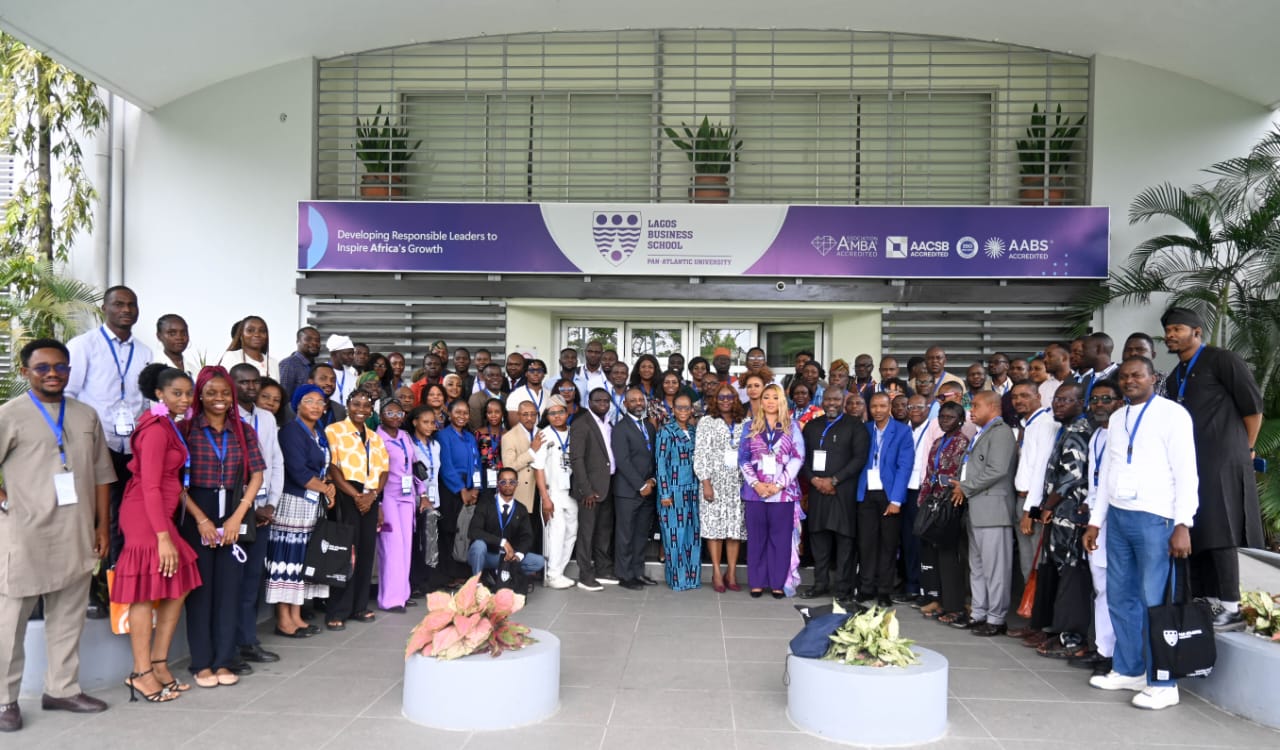
Our correspondent, OLUWASEYI ELIZABETH JIMOH reports on the highlights of the recent media roundtable hosted by the Pan-Atlantic University, Lagos and the Centre for Journalism Innovation & Development (CJID) on Monetising Journalism in the Age of Artificial Intelligence (AI).
When newsroom leaders, media professionals, and journalists gathered at Pan-Atlantic University, Lagos, for a media roundtable hosted alongside the Centre for Journalism Innovation & Development (CJID), an underlying tension hung heavily in the room.
The theme, Beyond the Byline: Monetising Journalism in the Age of Artificial Intelligence, addressed an elephant in the room that many media professionals face with deep anxiety: Is AI coming for my job?
Yet, as speaker after speaker took the stage, the narrative shifted from existential fear to strategic clarity. The consensus was clear: in an era when algorithms can generate millions of articles in a fraction of a second, competing on speed and volume is a losing game. To survive and thrive, journalists must anchor themselves in what AI can never replicate: an unwavering human presence, field-driven investigative depth, and uncompromised public trust.
Rethinking News: The Keynote Perspective
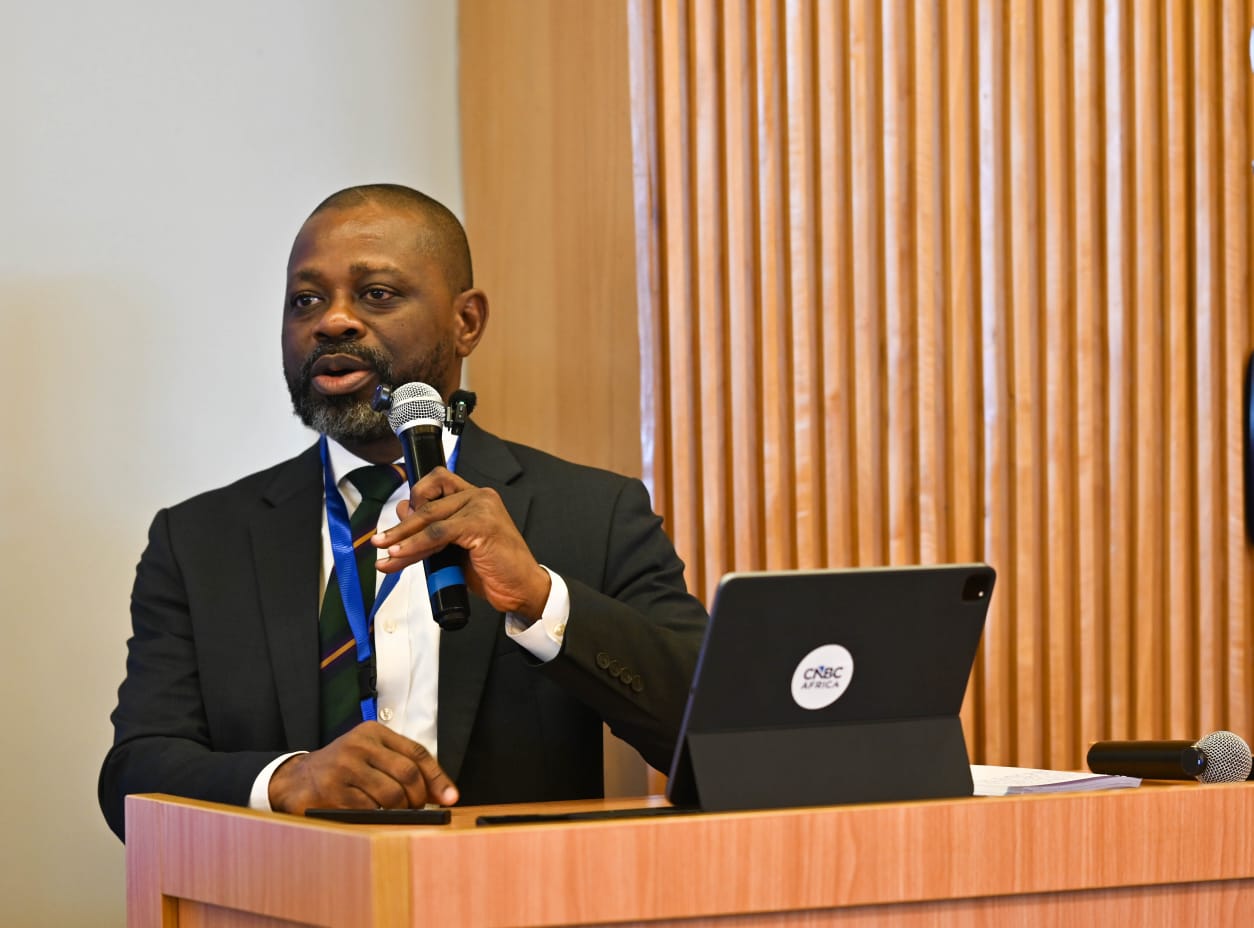
The keynote speaker, CNBC Africa’s West Africa Bureau Chief, Mr Temitayo Fagbule, set the stage by reframing what news means in a world saturated with synthetic content. He challenged journalists to stop viewing news as merely a list of breaking headlines or routine press releases.
Instead, he explained that “news is a sophisticated cultural medium—much like the traditional town crier’s agogo—crafted not just to break news, but to delight, inform, educate, and satisfy deep human curiosity.”
Drawing on global shifts and historical media economics, Fagbule pointed out that digital platforms have unbundled traditional news formats, while short-form videos and creator platforms are capturing massive audience attention.
However, with over 80 per cent of audiences in markets such as Nigeria and Kenya expressing grave concerns about online fake news, a significant commercial opportunity exists for high-trust, verified reporting.
To capture that opportunity, Fagbule urged media houses to adopt the playbook of institutions such as The New York Times, which has built a subscriber base heading towards 15 million by bundling high-value journalism with curated experiences such as explainers, newsletters, cooking, and games.
His advice to reporters was direct: prompt humans, not just AI. He urged journalists to ask questions on the streets and cultivate real-world access that AI chatbots cannot replicate.
He also highlighted the “eight lives of a single story”, encouraging journalists to turn field coverage into multiple formats, including breaking news, features, interviews, explainers, data stories, sensory human profiles, in-depth context, and direct newsletters.
Fagbule urged media professionals to focus on non-replicable value by investing in investigative legwork, deep context, and personal voice, particularly where critical thinking is required.
“Learn to prompt human beings… We underestimate what we have as journalists. We cannot continue to compete when there is an incentive to produce more,” he reiterated.
Daring to Offer What AI Cannot Replicate
Addressing the room’s anxiety, the panel moderator, Dr Margaret Agada-Mba, offered a perspective of optimism. Pointing to the steady rise in university admissions for media and communication programmes, she reminded the audience: “People are pivotal to your job. Don’t be gloomy about things, but think about dynamism,” she noted, calling for an urgent shift in newsroom mindsets.
Similarly, award-winning investigative journalist and PUNCH Weekend Titles Editor, Mr Samson Folarin, delivered a blunt wake-up call.
“You must think creatively. You cannot be a press release or a brown envelope journalist in this time and era because whatever you are submitting to the newsroom, AI will do it better and faster. You must think outside the box and think of what you can do differently.”

Folarin cited Fisayo Soyombo’s harrowing 47-day undercover investigation into modern slavery as an example of the kind of value that no algorithm can replicate.
“AI cannot go undercover on a mining site, endure physical trauma, or document firsthand human suffering,” he maintained, stressing that AI cannot match such levels of field reporting in delivering high-impact journalism that drives organic social media discussions and significantly boosts readership and circulation figures.
Speaking further, he revealed how simple, practical tools, such as custom Gemini Gems, can automate repetitive newsroom tasks, assist with headline options tailored to house styles, and help non-coders deploy web applications.
Navigating the Technology Shift and Deploying AI Workflows
The conversation turned to the rapid pace of technological change as the Acting Head of Department, School of Science and Technology, Pan-Atlantic University, Dr Desmond Moru, acknowledged that even technology experts feel the weight of this shift.
Drawing parallels with previous industrial revolutions and historical missteps, such as Nokia’s struggle during the smartphone boom, he urged media practitioners to remain open and flexible.
“Regardless of this generational change, what is to be consistent is to be open and not rigid or closed,” he advised.
He maintained that rather than fearing AI, journalists who learn to deploy it will outsmart those who do not.
Open-Access Civic Tools in Action
Demonstrating how technology can turn an existential threat into an efficiency tool, Engr Muzzamil Oreoluwa of CJID presented a suite of open-access AI tools developed specifically for African newsrooms.
These included:
Dubawa.ai: An automated audio-monitoring platform tailored to local dialects and speech patterns, including Nigerian English, Ghanaian English, and Pidgin. The platform monitors radio programmes and podcasts, transcribes audio, and automatically extracts thousands of claims.
AI Fact-Checking Chatbot and Widgets: An AI-powered WhatsApp tool that queries live web sources to rank and verify viral claims across 34 countries, alongside embeddable website widgets for real-time verification.
Civic Data Engines: Platforms such as Know Your Leader (Knowyourleader.ai) and Udeme.africa aggregate political records and infrastructure spending data, turning civic datasets into high-margin business-to-business newsletters, dossiers, and grant-funded assets.
Oreoluwa explained that automating research and monitoring frees up hundreds of research hours, allowing journalists to redirect their efforts to where they matter most: out in the field.
Fixing the Business Engine: The Fintech Approach to Monetisation
The session took an interesting turn as Wale Olajubu, Executive Director of the Health Business Academy for Africa, emphasised that creating great journalism is only half the battle; sustaining it requires financial intelligence.
Drawing on more than two decades of experience in banking and digital finance, Olajubu highlighted a critical gap in traditional newsrooms, noting that “journalists are deeply passionate about their craft, but often overlook the financial back-end that keeps the business alive.”
Borrowing strategies from the evolution of digital banking, including point-of-sale terminals, automated teller machines, and USSD, Olajubu challenged media outlets to remove payment barriers through three key approaches.
Seamless Payments: Make subscriptions simple. According to him, when readers encounter payment glitches while trying to access premium investigations, customers are lost immediately.
Audience Segmentation: Newsrooms cannot speak to every demographic in the same voice. They must segment their audiences and tailor formats and tones to TikTok-native youth, social media consumers, and corporate executives.
Monetising Direct Access: Rather than giving away high-impact investigative series and in-depth reports entirely for free, newsrooms must leverage direct subscription models to convert casual followers into paying subscribers.
The Bottom Line: Eyeballs Follow Authenticity
Reflecting on News Central TV’s journey, Rosemary Egabor-Afolahan, a market strategist and founding member of the network, shared how it built its commercial success by daring to report fearlessly, putting African perspectives first, and sending reporters directly to news sources rather than relying on studio analysis.
“For a news organisation to be commercially viable, we needed to sell trust to the audience and be consistent with that trust,” she said, maintaining that the business of media is built on eyeballs, and eyeballs follow trust.
The event was enlightening, and as media economics continue to evolve, the ultimate truth remains simple: AI is an extraordinary engine for speed and automation, but it cannot replace the human presence, courage, and public trust that underpin meaningful journalism.
Journalists who master digital tools, protect their brands’ integrity, and deliver value through their reporting will be better positioned to navigate the AI era.
READ ALSO: AI & Deepfakes: Who do we trust?