
Getting former President Olusegun Obasanjo to write the foreword to her book marking her fifty years in the media is a big deal, which veteran broadcaster and communication specialist, Mrs Bimbo Oloyede, should be proud of.
It is, however, a gamble, as Chief Obasanjo noted in the foreword for the book, launched in Lagos last week and titled Communication and the Media: Celebrating Bimbo Oloyede’s Contribution to Five Decades of Theory, Practice and Transformation, considering his love-hate relationship with the media.
The gamble, however, paid off, with Obasanjo acknowledging that the book is an “encyclopedia of Nigeria’s media, communication and information sector from colonial times till today, with contributions from great and distinguished members of the fourth estate of the realm.”
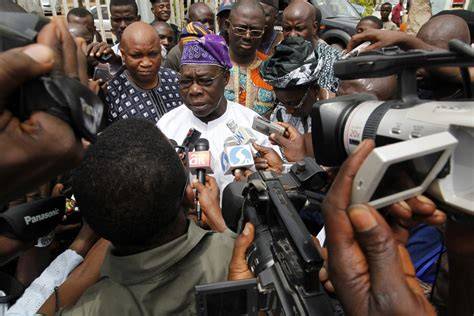
More importantly, the foreword, titled The Unavoidable Watchdog: Echoes of Excellence, offered General Obasanjo the opportunity to reflect on his interaction with the press over the years. He shared his experiences, observations and counsel for journalists.
On why he once put the sign, “Dogs, Journalists and miscreants are not allowed,” at his Otta farm gate, Obasanjo said it was because he needed peace and quiet on his farm without disturbance and rude interruptions after enduring “fair and unfair criticism, the polite and impolite approaches while in political office.”
He, however, said it was both a serious warning and an unserious joke, since dogs could not read the notice, while some journalists, including the co-founder of Newswatch magazine, the late Dele Giwa, were still regular visitors to his farm.
He described as outrageous the case of a journalist who never met him but fabricated an interview in which he wrote the questions and provided the answers, crediting them to him.
“I have no patience for ignorant people who manufacture statements and uninformed criticisms on what they know little or nothing about. I find such, which is not uncommon among some media people, irritating and insulting. Some never prepare themselves well before interviews. It is dereliction of duty,” he explained.
Notwithstanding, he believes that the media is necessary to report the activities of public officers, without which their performance would not be known.
Believing that there is no absolutely unbiased and unprejudiced reporter or journalist, as some can suppress or control their prejudices, biases and interests better than others, he said he got useful ideas, objective criticisms and recommendations from media reports monitored for him while he was Head of State and President.
“When I look back at my years in political office, I remember the reporters who made my blood boil. But I also remember the professionals like Bimbo, because when the press does its job properly, it is not the enemy of the government; rather, it is the enemy of bad governance.
“The journalist who only tells the leader what to hear is not a journalist; he is a court jester or commissioned agent. The journalist who tells the leader what he needs to hear is a patriot,” Obasanjo stated.
For the younger generation of journalists who will read the book, Obasanjo encouraged them to learn from the illustrious career of Mrs Oloyede.
“The media is not a weapon to be wielded against your enemies. It is a light to be shone in dark places.
“Be persistent but professional. Be critical but be fair and objective. And remember that the leaders you criticise today may be the ones who may have to write your foreword tomorrow,” he stated.
While he still values his privacy and dislikes sensationalism, uninformed, biased and prejudiced statements and criticisms, Obasanjo said, “life is too short not to embrace our public analysts, commentators, and creative performers,” many of whom were his friends and some still are his friends.