

Founder, JournoTECH in London, Elfredah Kelvin-Alerechi, who started her journalism career as a reporter and correspondent in Rivers State, Nigeria, is also the Chief Executive Officer, The Colonist Report UK and Africa independent investigative organisations.
With nearly a decade of experience as a technologist, web builder, app developer, researcher, and investigative journalist, she built and designed NewsAssist AI, which has attracted users across 117 countries.
In this interview with Media Career Development Network, Elfredah speaks on the intersection between journalism and AI, her digital and editorial work, advice for journalists and other issues.
The theme of the training by your organisation on September 4 is Enhancing Trust, Privacy and Security in AI across Journalism, Academia, Research and Civic Society. Why is this theme important, especially for journalists and media organisations?
Trust, privacy, and security form the foundation of journalism in a digital era shaped by AI. Journalists depend on trust to maintain credibility, yet AI-generated misinformation threatens that trust daily. Privacy is equally critical because journalists often work with sensitive data and vulnerable sources. Security ensures both the protection of information and the safe use of AI tools. Without these three pillars, the relationship between media organisations and the public will erode. That’s why this theme is not only timely but essential for safeguarding the future of responsible journalism. The core focus was to discuss whether we can trust AI as journalists, researchers, academics and civil society/rights groups with our work.
Apart from Trust, Privacy and Security, what other issues should journalists pay more attention to regarding the impact of AI on journalism practice?
Journalists should pay closer attention to bias and inclusivity in AI systems, the sustainability of newsrooms adopting these technologies, and how AI shapes public opinion. Transparency around AI use in storytelling is also key. Moreover, journalists should focus on skills development, understanding how to work with AI while maintaining editorial judgment, rather than being replaced or overshadowed by it.
What is the update on the use and adoption of your AI app NewsAssist by journalists and other professionals globally?
Since its official launch in May, NewsAssist AI has attracted users across 117 countries. Journalists, researchers, legal practitioners, and academics have used it for transcription, summarisation, grammar checks, and document analysis. We’ve recorded over 20k sessions. What’s exciting is the global spread of adoption, from Africa to Europe, Asia, and the Americas, which shows the universal demand for AI tools built with inclusivity and accessibility in mind. We have recently been accepted into the AI Founder Sprint of INSEAD AI Venture Lab to support and scale our product. I see this as a greater opportunity and achievement within just these few months of launch.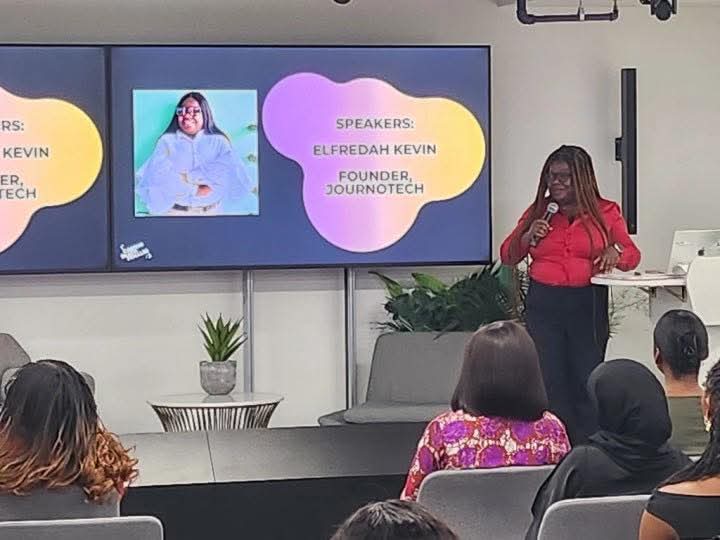
What makes it different from what other journalists have access to?
Unlike many generic AI tools, NewsAssist AI was built out of my lived newsroom experience. It is lightweight, multilingual (supporting English, French, Hausa, Yoruba, Igbo, Pidgin, and more), and designed for professionals working under tight deadlines and limited connectivity. Importantly, we don’t store user data, which strengthens privacy. It’s not just another AI tool; it’s a tool designed by journalists, for journalists, and adapted to the unique challenges they face globally. This was designed in a way that journalists don’t need to juggle around various tools, but can get the basic tools they need to enhance their work. We are working to add more features that will be very useful to both print, digital and broadcast journalists.
Reflecting on the motivation for starting JournoTECH, how would you describe the journey so far?
JournoTECH started as a way to train underserved professionals to use digital and AI tools effectively. We have reached and trained over 300 professionals across Africa, Asia, and the UK and are hoping to expand more. Professionals such as journalists, university lecturers, NGOs and researchers. It has been both challenging and rewarding, but seeing people adopt AI tools to improve reporting, research, and teaching has been fulfilling. The journey confirms that there’s a huge need for capacity building in this space, and we are just starting and have greater plans to bring digital tools and emerging technology, including AI, to underserved groups across the globe.
How well have you achieved the goal of The Colonist Report Africa to draw more attention to environmental, climate change and energy issues in Africa?
Well, we can’t say we have achieved our activities or focus well; rather I would say we have only started. We are growing, and one thing that makes me so proud of our work is the fact that we don’t just report stories; we look deep into issues and report them, and this takes several months to report our findings. Especially knowing the fact that we are a small team and self-funded, we have done so much within our strength and are hoping to do more in the future.
How did you transform from being a traditional journalist to being a tech-savvy journalist?
I have been a tech journalist since 2017. During the early days I started my career in journalism. I learnt programming languages like building websites and data analysis from a scholarship I got from a church (I can’t even remember the church name) because I saw it online and applied, and got selected. I started learning to understand what I could do with coding and journalism, so I settled for data analysis. However, in 2023, I decided to fully blend AI into my work, and it became easier because of my tech skills. The shift happened out of necessity. As a journalist, I struggled with long hours of manual transcription, burnout, and reporting under pressure. Moving to the UK and facing unemployment pushed me to learn digital and AI skills, often self-taught. I took courses, experimented with tools, and eventually started building my own. What started as survival turned into innovation.
What is your advice for journalists on how to maximise digital tools to elevate their practice?
Journalists should embrace digital tools and see these tools as enablers, not threats. Use them to speed up routine tasks like transcription, translation, or data cleaning so you can focus on deeper reporting and storytelling. Invest in continuous learning because tools change quickly. And always balance efficiency with ethics—don’t let convenience compromise accuracy or fairness. But in all, ensure you understand the policy of your organisation because some organisations may have certain rules that guide you on whether to use these tools or not or to what extent.
What other career advice can you share with journalists based on your experience of moving from reporting in Rivers State and becoming an international journalist of note?
Never underestimate your local story; it can have global relevance. Build resilience because the path won’t be easy. Keep upskilling; journalism today requires both editorial and technical skills. Most importantly, let your lived experience fuel your reporting and innovation. That authenticity is what will set you apart globally.
What does the future of journalism look like for you, considering the rapidly changing global media landscape?
The future of journalism is hybrid; human judgment supported by responsible AI. Journalists will increasingly work as curators and verifiers of information in an age of overabundance. Newsrooms that embrace collaboration between humans and machines, while keeping ethics at the centre, will thrive. I also see more cross-border collaborations and stronger integration of civic tech with journalism. In fact, in the future, the newsrooms and journalists that say they don’t want to use AI will certainly use it because no one wants to be left behind in the fast-evolving world.
Any other thing you would like to speak on?
I’d like to stress that the conversation about AI and journalism must not exclude voices from the Global South. Too often, solutions are designed elsewhere without considering local realities. Through NewsAssist AI, JournoTECH, and The Colonist Report Africa, we are proving that innovation can be inclusive, locally grounded, and globally relevant.
READ ALSO: JournoTECH launches NewsAssist AI