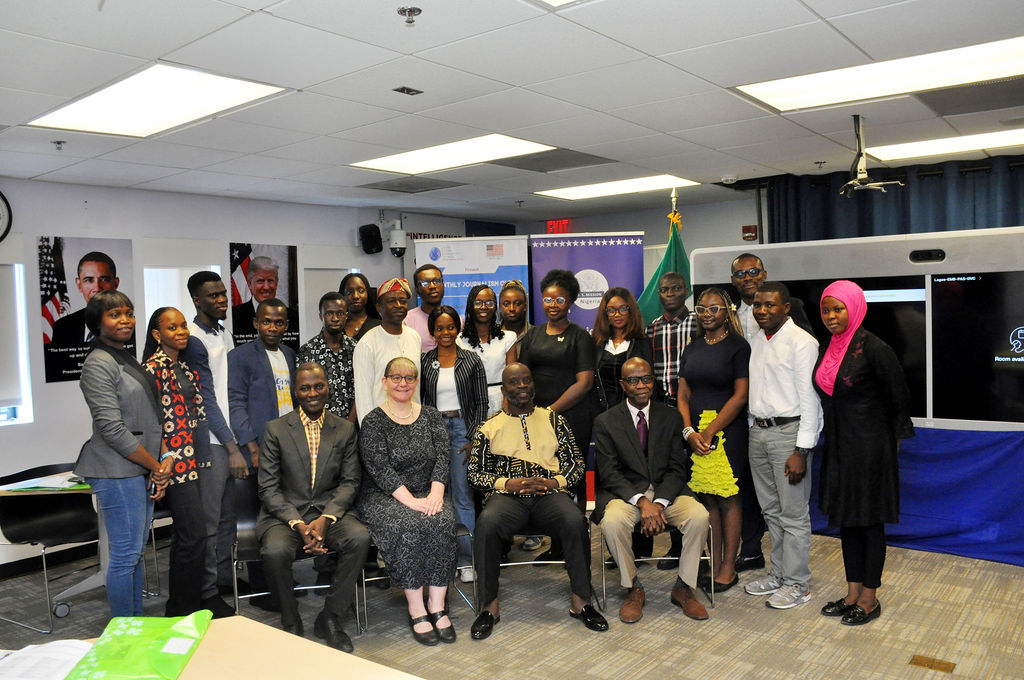
The Media Career Development Network (MCDN), in partnership with the U.S. Consulate in Lagos, has held the second edition of its bi-monthly Journalism Clinic training for young journalists, emphasising the importance of being well-informed about legal restrictions and media ethics.
At the session held on Thursday, July 10, at the U.S. Consulate in Lagos, Acting U.S. Consul General JoEllen Gorg noted that building a strong foundation in media law and ethics is so critical for all journalists.
She noted that law and ethics are not just academic concepts; they are the tools and guardrails that will help you navigate complex situations, protect your integrity, and earn the trust of your audiences.
“ Every word, every sentence, has the potential to make a difference in someone’s life. But with that potential for change comes a responsibility to seek the truth, to be fair, and to be honest in your work. Journalism isn’t just about writing what you think or feel.
“It’s about grounding your stories in facts, ensuring you’ve done the research, and giving your audience an accurate picture of what’s going on and not manipulating them to fit a narrative. That’s what separates real journalism from clickbait or fiction, Gorg stated.
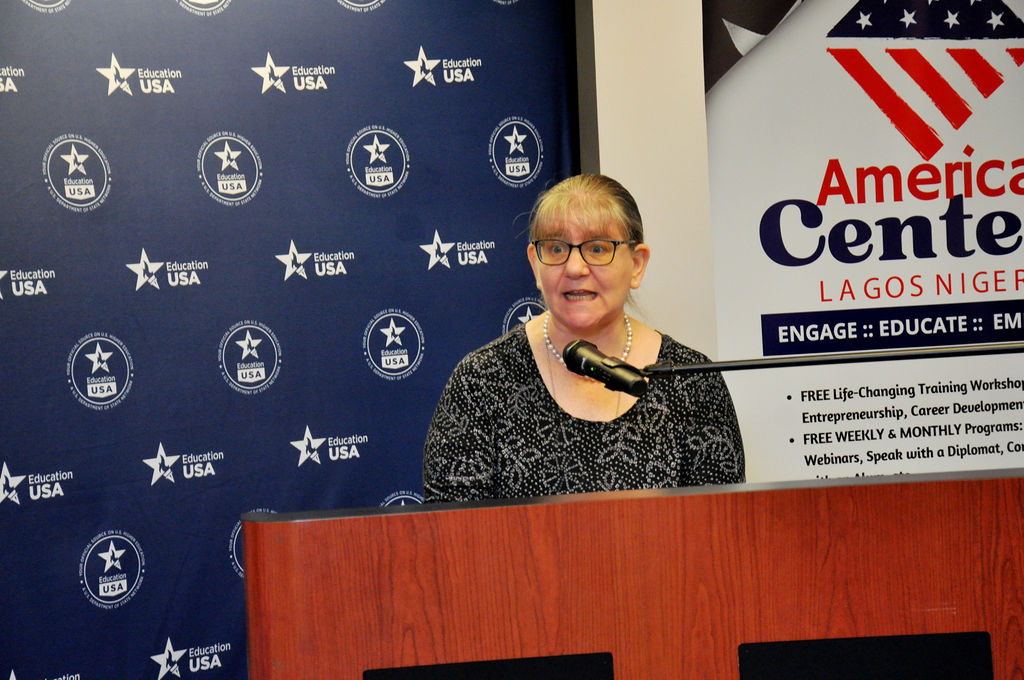
According to the Acting Consul General, the United States is an ardent defender of a free and responsible press because the media plays a vital role in any democracy.
“Each day, we express support for the right of individuals to speak, publish, broadcast, blog, tweet, and otherwise express themselves openly, without fear of retribution. And when journalists are unfairly treated or harassed, we raise these issues in our meetings with senior officials at the highest levels.”
She said the US Mission in Nigeria is working on new programmess, workshops and U.S.-based training and reporting opportunities such as the International Visitors Leadership Program, or IVLP, and the Foreign Press Centre International Reporting Tours, to support the important work that journalists do.
The CEO/Editor-In-Chief of Diamond Publications, Mr. Lanre Idowu, who spoke on the ethics of the media, urged journalists to internalise ethical principles, not simply memorise them.
“Ethics is not something you cram. It’s a living thing,” Idowu told the participants, noting that “once you imbibe it, it becomes second nature. Ethics guides your decisions daily.”
He underscored the importance of Nigeria’s 2022 Code of Ethics for Journalists, describing it as a model of co-regulation—a framework championed by the media but inclusive of public interest groups.
Central to this framework is the Nigerian Media Complaints Commission (NMCC), chaired by Emeka Izeze, a former Managing Director of The Guardian. Idowu noted that the NMCC includes not just journalists but a mix of lawyers, academics, NGOs, and even politicians, including Prof. Chinyere Okunna, Nigeria’s first female professor of mass communication.
He highlighted cases in which the NMCC ruled against media organisations, including The Guardian, illustrating that even stakeholders close to the press are held accountable. “This shows that the media is open to oversight — if it is done by people of goodwill,” he said.
Idowu walked participants through the Code’s 16 articles, beginning with editorial independence. He warned against allowing external influences to dictate coverage. “You can tell a story about an oil company, but do it because the story is worth telling — not because you were induced to do it,” he advised. “Ethics should shape your decisions, not convenience.”
The second session, led by Mr. Gbemiga Ogunleye, a seasoned journalist and lawyer, focused on media law. Ogunleye, a former editor at The Punch and past Provost of the Nigerian Institute of Journalism, stressed the need to balance press freedom with responsibility.
“Journalists have the right to publish, but that right doesn’t extend to defaming people,” Ogunleye said. “For some, a good name is all they have. If you smear it, you have destroyed something precious.”
READ ALSO: AI platform for African journalists, digital creators/storytellers
He explained defamation and its long-term consequences, especially for individuals who may seek public office or traditional titles. “What you publish could follow someone for life. That’s why you must be certain of your facts,” he said.
Ogunleye encouraged participants to read the Nigerian Constitution and familiarise themselves with legal provisions like Section 24 of the Cybercrime Act and Section 59(1) of the Criminal Code, which touch on incitement and false reporting.
He warned against the indiscriminate use of social media. “Just because the law isn’t enforced today doesn’t mean it won’t be tomorrow,” he cautioned. “Be careful what you forward on WhatsApp.”
He called on journalists to uphold ethical standards, stating that: “Ethics, ethics, ethics. That is your shield. Once you get it right, you can stand by your stories.”
The journalism clinic is part of MCDN’s long-term commitment to strengthening professionalism in the Nigerian media and empowering a new generation of ethical, informed, and impactful journalists.
The second session, led by Mr. Gbemiga Ogunleye, a seasoned journalist and lawyer, focused on media law. Ogunleye, a former editor at The Punch and past Provost of the Nigerian Institute of Journalism, stressed the need to balance press freedom with responsibility.
“Journalists have the right to publish, but that right doesn’t extend to defaming people,” Ogunleye said. “For some, a good name is all they have. If you smear it, you have destroyed something precious.”
He explained defamation and its long-term consequences, especially for individuals who may seek public office or traditional titles. “What you publish could follow someone for life. That’s why you must be certain of your facts,” he said.
In his welcome remarks, Mr. Lekan Otufodunrin, Executive Director of MCDN and former editor at The Nation newspapers, expressed gratitude to the U.S. Consulate for its continued partnership. He encouraged the participants to make the most of the opportunity to learn basic laws and ethics, which sets professional journalists apart from others who write or produce content.
Participants took turns to ask questions and contribute to the topic of discussion during the interactive session.
The journalism clinic is part of MCDN’s long-term commitment to strengthening professionalism in the Nigerian media and empowering a new generation of ethical, informed, and impactful journalists.